



































Excuse Us, Ayron Jones

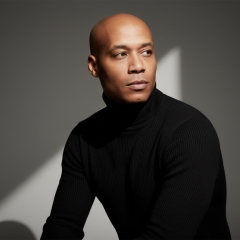
Almost 100 years after Robert Johnson made his mythical journey to the crossroads, Ayron Jones found himself at a similar fork in the road a few years ago. It wasn’t at a landmark junction in Mississippi but rather in his native Seattle as the rocker looked for the next path forward. Thankfully, he knew how to make a better decision than dealing with the devil.
Jones realized he didn’t need to sell his soul at all. He just needed it to be freed from a major label deal that had been crushing it. With that transaction complete in 2023, he pulled one of Johnson’s disappearing acts to further hone his craft with his go-to collaborator Marti Frederiksen, and now returns with a new level of mastery on Excuse Me. Out February 26, 2027 via indie distributor Thirty Tigers, it’s Jones’ first album in three years, and unsurprisingly, it’s got the blues.
More from Spin:
- Charli xcx Added To New Martin Scorsese Film
- O.A.R. Celebrate 30 Years
- Deep Cut Friday: “Found a Job” by Talking Heads
“That was where I truly started. I may have gotten big in rock radio [with songs like “Blood in the Water”], but I also came from this blues world,” says Jones, daring anyone to ask his contemporaries Samantha Fish and Christone “Kingfish” Ingram for stories.
“Seriously, ask all the blues cats around my age group and even older, they know who the fuck I am. I was in the blues scene before anything else,” Jones staunchly adds, recalling the days when he was opening for the late B.B. King and Jeff Beck circa 2014, when Jones was just 28 and cutting his teeth as a professional musician in clubs around the Pacific Northwest. “For me, it was important to tap into those roots on this record. … I think it’s so important to talk about where I came from.”
The album cover is the first entry point. Shot in a grainy black-and-white filter with retro mustard-colored font, it looks like a Chess Records capsule piece. In the center is Jones with an electric guitar slung over his shoulder in a protective gesture, like some mothers carry babies on their hips. He walks along a gritty alleyway with fire escape lattices in the distance and puddles under his feet, bearing a side-cocked glare that says follow me for the good stuff. If you listen closely to the record, you’ll be glad you did. Jones’s blues chops spill out of the speakers on the scorching declaration “Freedom” and are embedded within the guitar weeping of the worker song “When My Day Comes” that channels the greats with the precision of an amplified Ouija board.
But the blues is just one sound Jones taps into on his revival record. “I got my own set of rules,” he declares, really tapping into his autonomy as a free artist now. “This record doesn’t conform to any idea or any particular genre. I just wanted to make an album that was going to be everything I loved about music.”
That translated into a vibrant palette of rock ‘n roll, soul, metal, hip-hop, and of course the rich Seattle sound that saturates daily life for Jones. There’s no denying album opener “Strike of a Match” carries the angsty ennui of grunge’s Big Four while the melodic burner “Glad You Came” is an even more obvious descendent, carefully scraping at the fingertips of Alice in Chains to grab the band’s DNA.
Though Jones was born in 1986, around the time Nirvana and Soundgarden were taking their first steps, he was adopted into the inner circle as word started to spread in town about his talent. It was actually “Baby Got Back” figurehead and fellow Seattleite Sir Mix-A-Lot who discovered Jones’s first band, Ayron Jones and the Way, at a dive bar.
“He was the first person that helped me produce an indie record and get me into songwriting,” recalls Jones. “That was the first time I learned about song structure and composition.” That connection eventually created a pathway to Screaming Trees’s Barrett Martin, who soon became an important mentor.
“Barrett was the person that taught me what it meant to sound like you were from Seattle … the tones I’ve been carrying with me since my indie records, Barrett taught me, like, if you plug your guitar into a Leslie, you’re going to get this grungy, watery tone.”
From there, Duff McKagan, Mike McCready, and Matt Cameron became quick allies and cheerleaders. “[Alice in Chains drummer] Sean Kinney brought me weed to my house yesterday, and then we went to go pick up my kid. This is just Seattle,” Jones shares with a laugh, further illuminating the depths of the community that still run deep in the town.
Evidence of this kinship is on the walls of his home. In the room where he’s taking the video call, you can’t help but notice a prominent gallery of photos behind him. “They’re mostly of me because I’m an ego-driven bitch,” he jokes in a way that makes him humble even if true. But Jones’ home museum is less self-aggrandizing as it is documentary in nature when you consider the source. All were snapped by his good friend Karen Mason Blair, an iconic photographer who had a front-row seat to the early days of the Seattle scene.
Mason Blair captured rare promo shots of Mother Love Bone as well as Pearl Jam’s first concert in 1991 and images of Nirvana that made the covers of live DVDs. She also took Alice in Chains’s first images for Rolling Stone. In the mix of live and portrait shots she took of Jones, the oldest one is from 2015, a striking black-and-white image from “back when I had a jawline,” Jones snickers. It hangs near a poster of his other Seattle hero, Jimi Hendrix, whose style of playing with wah-wah pedals and mix of blues and rock has become a dreamcatcher comparison for Jones’ musical work.
“Without the Hendrix family, I really wouldn’t be here,” Jones admits, specifically referencing Jimi’s nephew Austin for a pivotal introduction to Janelle Monae and the Wondaland world, resulting in Jones being given the opportunity to play guitar for one of the collective’s artists, Deep Cotton. “That was what inspired me to become an artist from that point forward, because before that, I had an idea, but seeing what they were doing, I was like, dude, this is what I got to do,” says Jones. “So yeah, without the Hendrix family and all these things happening, I wouldn’t be here. And that’s why it’s so important for me to carry on that legacy. Not just as a person, but in my sound as well. I would do myself a disservice to have all these people be involved in my career and then they’d be like, oh yeah, we’re going to play some emo music.”
None of this was supposed to happen for Jones. He demurely refers to himself as “the Slumdog Millionaire of rock ‘n roll.” As he explains it, “If you look at the elite of the music industry, it’s a bunch of kids who are groomed and brought up to be there. They were trained as Disney kids and had parents who were this and that. And here I am, some kid from the streets, but I found a way to get in those rooms, in those faces of people that could help me.”
Jones describes his father as a “gangster and a pimp” who was never around and his mother as a 19-year-old “impressionable young woman” who struggled with addictions to drugs and alcohol. He was legally emancipated from his biological parents when he was 7 years old and raised by an aunt who “did a great job,” though they clashed often. “I consider her a motherly figure, but I knew I wasn’t her child and I felt that from her,” he adds, understanding more about the bond now that he’s a dad to five himself.
Naturally, music became his escape. “I just threw myself into it,” he says, about writing music. Frisbee became an escape too; Jones is a champion at the sport and medaled for Team USA at the 2008 World Championship.
As a child he taught himself piano out of boredom. “This was back in the day when all you had was air TV. We couldn’t afford cable,” he explains. Violin and guitar came into the picture soon thereafter, around the time a language arts teacher got him interested in poetry. By his senior project in high school, Jones had written a whole suite for a chamber orchestra coordinated to his guitar playing. “I was doing these things at such a young age. And I look back and I know it’s because I had to escape my circumstance before I was old enough to walk out of the house and do my own thing. That was music for me. And it still is.”
Many of these childhood trials and lessons were natural fodder for his first two albums for Big Machine, 2021’s Child of the State and 2023’s Chronicles of the Kid. Both did well, especially on radio, and along with tour dates opening for the Rolling Stones and Guns N’ Roses, the music helped establish Jones as a formidable new force. In 2022, he was nominated for Best New Rock Artist at the 2022 iHeartRadio Music Awards. A year prior, he became the first Black solo artist to have a No. 1 single on the Billboard Mainstream Rock chart with “Mercy.” It’s a feat he shrugs off. “This is kind of the plight of Black America, that we’re always going to be facing adversity and overcoming and making these accomplishments happen for ourselves. And if the world takes time to celebrate that, so be it. But at the end of the day, we didn’t do it for that. We did it for the love of the music.”
With Excuse Me, though, it’s clear Jones has fully come into his adulthood as an artist. “It was supposed to be a trilogy,” he says of the three-album suite. “That was really what the whole premise was and had I stayed with Big Machine, I think that’s how we probably would have done it. It’s really supposed to be the evolution of Ayron Jones.”
In fact, he almost called the new album Ayron Jones. “But my manager was like, ‘So you’re going to have an album called Ayron Jones by Ayron Jones. I was like nah.”
Besides, the name Excuse Me taps into the attitude shift that’s peppered throughout the entire album—it can be polite and inviting or rude as hell. “It’s both. Like, here I am. I’m back in my indie grind. I never left. … But it’s also sitting in a room full of people and demanding their attention and saying, ‘Excuse me, people are hurting right now and it’s important they’re heard.’”
True to that agenda, Jones fills the album’s 10 tracks with narratives on anxiety, anger, existentialism, and inequity, all packaged into the hardship elegies he learned from the blues masters. “It’s simple storytelling. It’s digestible. It’s a way for people to really get into what you’re doing and be able to sing and feel your music,” Jones summarizes what he learned from the greats. “You want to give people something they can feel and take home with them, something that’s real.” But the songs also carry the heaviness of Seattle’s sonic palette too. “Reality feels bleak for a lot of people, just as it did in the ’90s for a lot of kids at that time,” Jones says, “and I feel like it was important to talk about all of that.”
Starting with “Strike of a Match,” the album starts with the Godfathers’s bleak outlook of “birth-school-work-death.” Jones admits, “the basis of this message is we’re going to die. Period. Full stop.” But in his characteristic double entendre way of writing lyrics, the idea of striking a match is not only about lighting the fire that implodes it all, but it can also be a catalyst for striking while the iron is hot. “The song really touches on the powder keg that we’re sitting on right now. And all it takes is that and it’s all gone,” he explains, with a sharp snap of his fingers. “So, what are you going to do right now?”
As the album continues, Jones waxes about relationships and how hard it is to meet people in our current isolation box (“Glad You Came”) and pulls away the curtain of the entertainment complex and its ability to distract from the growing wealth gap on the heavy track “Hollywood.”
“I just want everybody to realize that American pride was never owned by one person or another. And you can be proud of your country and still want things to change,” he says, explaining his lyrical inspiration with a fine-print footnote.
But in the midst of the unavoidable commentary, Excuse Me also leaves listeners with powerful messages of hope. The Prince-heavy “A la Prochaine” is the most obvious, a soulful testament that time heals and runs on a continuum that will always bring people back together, no matter how much we drift.
Over the years, Jones has spent quite a bit of time in France, where he has a fervent fanbase and has picked up the language—and that phrase in particular sticks with him. “A la prochaine was one of the first phrases I learned, and it’s probably the most profound. It’s like ‘until next time’ but where time is implied,” he explains, relating it back to finding himself at the crossroads of his career and life in general and knowing he had two choices: to stall or keep moving. “For me, it was like, if I don’t see you in this world, I’ll see you in the next one. … It’s a message of hope and realizing that life just keeps going on and on. We’re not going to lose it.”
To see our running list of the top 100 greatest rock stars of all time, click here.
What's Your Reaction?
 Like
0
 Dislike
0
 Love
0
 Funny
0
 Angry
0
 Sad
0
 Wow
0