









![Zach Cregger's Resident Evil Has Way More Visual Effects Than You Realized [Exclusive]](https://www.slashfilm.com/img/gallery/zach-creggers-resident-evil-has-way-more-visual-effects-than-you-realized-exclusive/l-intro-1791479889.jpg?#)









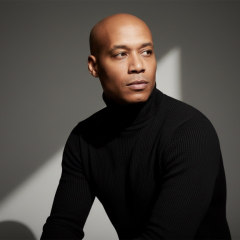
Mod Sun: “I Make Art Like I’m Already Dead”

“I suck the energy out of a room. Not in a bad way, but not in a great way sometimes.”
Mod Sun’s self-reflection may be accurate, but in our Zoom room, it actually is in a great way. Yet at the same time so intense and with a train of thought so effusive that the singer-songwriter suggests a “safe word” in case he needs to shut up so I can get a question in edgewise.
More from Spin:
- Tom Petty’s Biggest Fans Tell Their Stories On New Podcast
- Fontaines D.C., ROSALÍA Make An Unexpected Team
- Britney Spears Unearths Long-Lost Justin Timberlake Duet
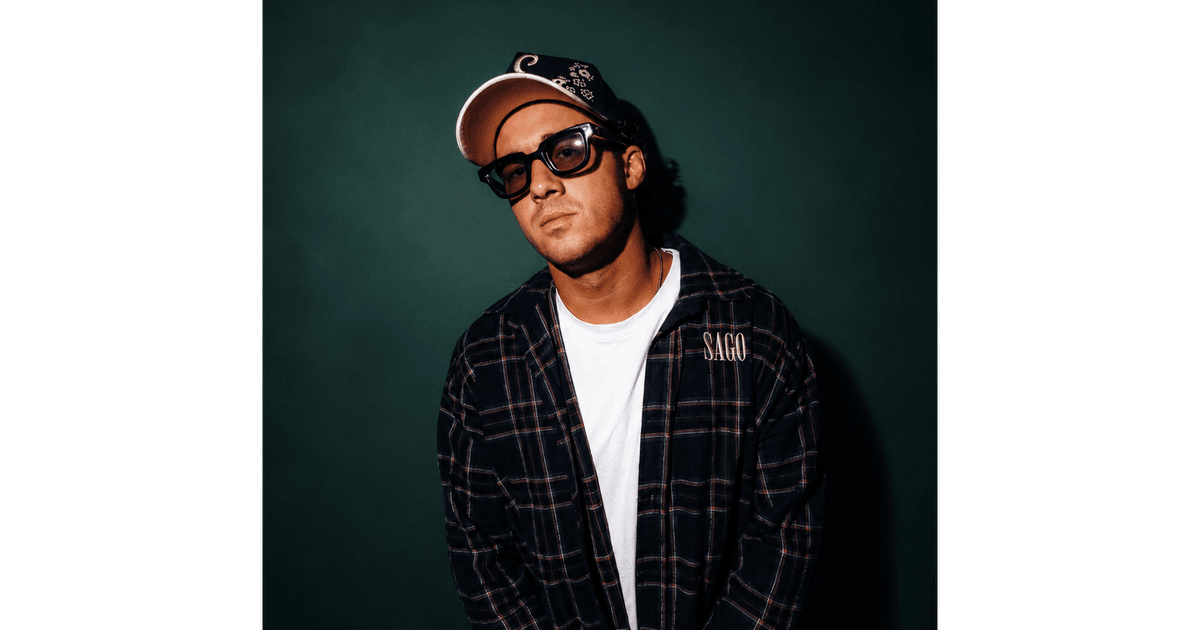
If Mod Sun decides to give up music, he’s got a great career as a spiritual motivational speaker. In a white T-shirt and chunky silver necklaces, dark glasses, and what appears to be several days’ worth of facial scruff, talk of his latest single, “Silverline,” from his upcoming 2027 album veers into enthusiastic not-quite asides. With an unerring flow, he moves from Charles Bukowski (Mod recites a poem), his late father’s suicide attempt, his total fan-boying over the Goo Goo Dolls’ John Rzeznik (“I would study everything that made Johnny Rzeznik who he is”), and the wood and metal “home décor” item he made in honor of “Silverline.”
“Hold on, I’m gonna show you,” he jumps up and grabs the piece, and holds it up to the camera. “It’s a catch-all tray,” he says, displaying a beautiful piece of rough-hewn wood, bisected by a silver line that looks to be about the size of two fingers. He pops out the silver line. “When you take it off, under it, it says ‘It’ll be okay.’”
It’s so beautiful and provocative that it’s nearly tears-inducing. He slides the silver piece back into the tray. “It’s something that’s raw next to something that’s embellished.”
Everything is seeming inspiration for his music, which he began creating when he was Derek Ryan Smith, growing up in Minnesota, discovering Hanson on TV. That led to drumming on pots and pans, and, years later, a punky band, a 2010 release (The Hippy Hop EP) then a 2015 debut album, Look Up. Collabs with now-ex girlfriend Avril Lavigne, Machine Gun Kelly, and one of his idols, Travis Barker, furthered his oeuvre. Mod Sun’s style and life evolved, and now, seven years sober, and recently relocated from Los Angeles to the Nashville area, he’s on the cusp of his sixth solo album.
“Silverline,” a beautiful, gentle three-minute gem of a single with a dynamic soaring strength, is an ode and promise to someone struggling with addiction. The lyrics are from the POV of someone on the other side of it. “I’ve been there / I know just what it’s like, to love the things that hate you back / I promise that it’ll be ok,” he assures, singing with a gentle lilt. “You wake up sick and make it through the day / dry your eyes / I know it’s hard to change. Even though I had to leave, I’m still happy you happened to me.” Despite the separation, there’s still a caring commitment: “I just need to know that you’re alright…So I’ll call you once a week, to make sure that you’re not dead.”
Mod Sun doubles-down on the song’s vow, explaining, “I could be laying with my future wife, I could be in the middle of the most busy meeting of my life. But if this person calls me, I made a promise to myself that I will answer the phone because I know what this person goes through.
“The beauty of this song is that my entire life I’ve tried to do what the greats say. Because what the industry says and what the greats say are totally different,” he explains. “The industry says, ‘be relatable,’ That’s how you make a ‘big song,’ make it relatable to as many people as possible. The greats say, ‘write it as personal as possible, and that will in turn make it more relatable to the listener.’
“I’ve struggled my entire career to do the specifics,” he furthers, dragging on a cigarette, along with coffee, his last remaining vice. “I love a Phoebe Bridgers, but I’ve never been able to say ‘I’m sitting in a Walmart parking lot at 12:13 p.m. on a Saturday afternoon.’”
On the cusp of 40, Mod Sun’s got influences and knowledge far beyond his years. And a cleverness with words, as illustrated in lyrics, conversation, and album titles including Internet Killed the Rock Star and God Save the Teen.
Creativity is often intuitive, he believes, using a fellow Minnesotan as an example. “When you live in the philosophy of Bob Dylan, one night you leave the window open and [inspiration] flies in. In an absolute flash, it just goes, ‘That’s what this is.’ Sometimes it happens early in the process of making something. Sometimes it happens fourth quarter, but I always allow that channel to be open. I believe that the things that you need are always looking for you. If I lose a piece of jewelry, I look at it like it was holding an energy that needed to go, and I’m not gonna look for it. If it wants to find me again, it’s out there looking for me.”
As to the people who find Mod Sun, there’s much to be gleaned from the frontman. The complex creator is an open book, and, as a de facto role model by dint of his musical career, he shares his insights on mental health. “The first thing is that the strongest, bravest thing you can ever do in the world is ask for help. That’s just it. It’s very easy. It’s a cliche for a reason,” he says.
“The second one, that you can do for yourself, is that there’s a way to have a lust for inner peace. Whether you ever attain it, that’s debatable. But the search and the desire for inner peace can start right now. Immediately you can start that.”
Personally, he says, “my thing that I get high off of—and it’s been that way since I was a child, is discipline. The second that I say I’m not going to do something, I actually get high off of being around it and not having to do it. Like that actually gives me a high.”
He also believes in the power of ritual, much of it learned from Japanese philosophy. “You wake up and you give yourself rituals. Talking about addicts, it’s like the discipline an addict has to get fucked up every day is Olympian-level discipline.”
That discipline can be redirected. “It’s 3:00 a.m. and you’re meeting a dealer on the side of [L.A. street] La Cienega, in a parking lot. That is discipline. You transfer that. You could become president if you want with that discipline. Give yourself rituals. When I wake up, I start my day by lighting incense, making coffee, putting on Japanese Zen music. I’m terrible at what they say the ‘act of meditating’ is, but I was taught from a healer to just sit down and breathe deep for 10 minutes.”
He espouses the Wabi-sabi philosophy: accepting and finding beauty in imperfection, impermanence, and incompleteness. To that end, his upcoming, as-yet-untitled album is “about the struggle of losing it all over and over. I’ve lost every fight, but I’ve never not gotten back up.”
For Mod Sun, artistic success equates to never quitting. “I think about some of the greatest not-living artists of all time who didn’t even sell a painting while they were alive. And now every painting of theirs is in the MoMA. It’s like you’re just spitting in their face. You didn’t even appreciate this shit while they were here.”
With more than 800,000 Spotify listeners, and accolades galore, Mod Sun is enjoying recognition in his lifetime for his original and varied take on music—he plays drums on the new record, and worked with collaborators including producer Malay (Frank Ocean, John Legend) and songwriter/producer Ryan Carpenter. Yet despite Mod Sun’s deep dive into his myriad influences, he notes, “I never cosplay my favorite people, even though I could give you a 100-page thesis on Dylan’s Blood on the Tracks.”
Mod Sun’s ever-evolving creative philosophy isn’t focused on the end game of success. “Music is an act of service,” he believes. “If it weren’t, you would never release a song. You’d just keep for yourself.” 
Connection is his goal. “I can really see someone who’s tortured, and I believe they deserve a witness. Those are the people who I’m able to really understand more, because outwardly my goal and my purpose is to bring energy and joy and lift other people up.”
Going even further, he states, “That is your duty of being an artist right now—do this person-to-person and do everything that you would have done before social media existed. The human psyche is starving for that right now.”
Still, Mod Sun admits that he’s a work in progress. “Oh my God, bro! I’m flawed,” he rants. “I am imperfect. I just believe that I don’t know how to shut my mouth. I only know how to speak my story.” Inside, he admits, “I am totally a broken kid, like completely shattered, wide open, [but] I save that for myself. I believe that everything that I do in the moment will be more important when I’m dead and gone, and I live from the aspect that I’m already dead. I make art like I’m already dead.”
Mod Sun has had many people close to him die, and of his troubled alcoholic father (who became friends with his son’s pal MGK), he recalls, “he was the quote from [the Hunter S. Thompson book] Fear and Loathing in Las Vegas. He was ‘too weird to live, and too rare to die.’ One of God’s own prototypes is what they say.”
The singer himself has become, with conscious effort, a wonderful prototype of positivity, his dark days of addiction replaced by an overwhelming aura of humanity and creativity.
“My goal and my purpose is to bring energy and joy and lift other people up,” he says. He says hello to every stranger, opens doors, radiates openness. Mod Sun speaks of a new self-awareness that’s reflected on his upcoming record.
“My only hero now in life, my true thing, the only thing I want to be now at this point in my life is nature. That’s it. I used to want to be like people,” he recalls of his human heroes, concluding, “and now I want to be like nature.“
To see our running list of the top 100 greatest rock stars of all time, click here.
What's Your Reaction?
 Like
0
Like
0
 Dislike
0
Dislike
0
 Love
0
Love
0
 Funny
0
Funny
0
 Angry
0
Angry
0
 Sad
0
Sad
0
 Wow
0
Wow
0