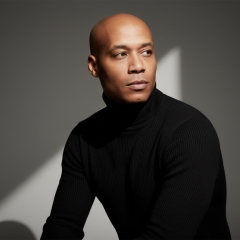





































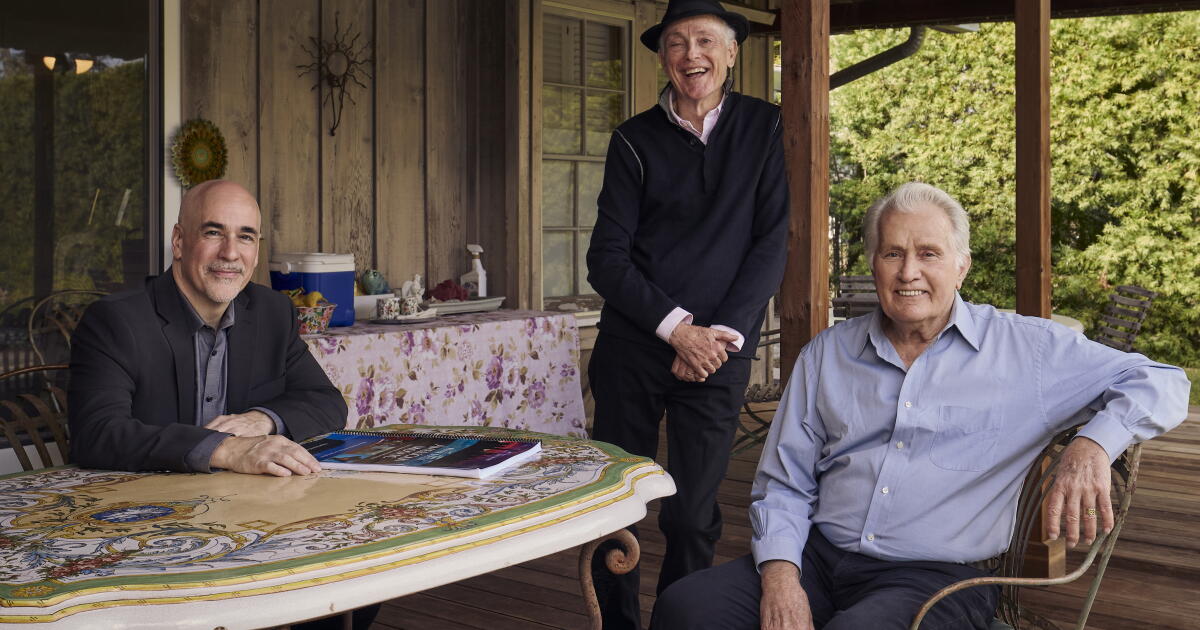




IN EFFECT with Kernom Pedals’ David Joly

The youthful Frenchmen behind breakthrough guitar pedal maker Kernom—a company founded on the motto “Never Stop Playing”—found themselves with an interesting challenge when they set out to enter the crowded “boutique pedal” market. Their goal? To create pedals that were less about tech specs and more about creative inspiration; less about how many sounds you could pack into a single pedal, and more about the artistic fluidity of each sound.
See, in the world of guitar effects pedals—those little rectangular metal “stompboxes” that sit arrayed at the feet of nearly every electric guitar player at every show you see—there are typically two types of pedals you’re likely to encounter. One type of pedal, typically an “analog” device, focuses on doing a single thing really well, creating a certain type of echo, for example (a “delay” pedal) or maybe nailing a certain “dirty” sound made famous by a Jimmy Page or Jimi Hendrix (a “fuzz”’pedal.)
More from Spin:
- Iron Maiden, Z2 Comics Make ‘Time’ For Graphic Novel
- Micah Nelson, Daniel Lanois Team For Debut LP
- Four Tet Reimagines The Durutti Column’s ‘Shadow’
The other type—including what are known as “multi-effectors” and “effect modelers”—set out to do everything well, from echoes to fuzz to the syrupy, swirly sounds known as modulation, with limitless control over said sonics. They often do so by trading analog parts for digitally produced emulations of those same sounds. It could be argued that, to some degree, they sacrifice the richness of analog for the flexibility and range—and techy drop-down menus—of digital.
But what if creative flow, not technical intrigue, were the priority? What if you didn’t need menus, or to sacrifice the warmth of analog for an extremely wide range of tones in one pedal? That, as Kernom’s creators quickly realized, was the question they wanted their pedals to answer, not just in the interest of market share, but to allow musicians greater freedom and more fluidity in the creative process.
The result? Kernom’s distinctive line, embraced by artists including Troy Van Leeuwen of Queens of the Stone Age and more, each of which boasts two singular features: Kernom’s proprietary Analog Morphing Core technology, and its corresponding Mood knob, which frees musicians from having to choose only between, say, a “flanger” and a “phaser,” and allows them to overlap and interweave those effects in the brave space between.
We sat down with Kernom’s David Joly recently to explore the design philosophy and real-world applications of the Kernom line, which includes the Ridge Overdrive ($269, street), ELIPSE Modulation ($299, street), and MOHO Fuzz Workstation ($289, street).
I really enjoyed Kernom’s short film, Tonal Waves, where you visited notable engineer-producers across the US, including the great Tony Berg at Sound City, LA. , who said to you, “There are very few companies making pedals where you’re eager to buy them because it’s that company. That’s when you’ve really arrived—when it’s not based on just pedal, but a sonic ethic.”
It was great to hear that, and that’s what we feel makes us different. Our philosophy is no screens: You plug in, listen, and you feel good and enjoy. Instead of endless searching through a menu to find a sound that may or not be what you’re after, we wanted to give musicians the same tactile enjoyment as classic analog pedals, but with the expansive palette of digital. That meant pedals that offer the physical feeling of touching and turning real knobs, rather than using a mouse to click virtual buttons inside a complicated menu.
The real magic that happens for recording and performing musicians is the amazing moment when, after a certain amount of knob tweaking, you suddenly feel fully connected to your tone. It’s a magical moment, a spark, even a kind of epiphany. Then you have it: a fresh melody emerges from that spark, something that makes you want to keep pushing toward the realization of that initial spark. A single moment of feeling one with your tone will also inspire your bass player, your drummer, even the singer and lyricist. That’s the magic. That’s why we’re so passionate about making Kernom pedals.
What are Kernom users telling you about how the pedals enhance their creative experience?
David Joly: These pedals are not strictly technical tools: they function as evolving palettes of tonal colors that are designed to keep you feeling creative and in the flow. That said, the #1 feedback we get is about the pedals’ versatility. You don’t need to have five or six pedals to capture the range of, for example, analog distortions you want, because it’s all there, and you call up the tones you want, from this vast range, in 30 seconds. Again, all analog circuitry. That’s unique.
So, the first comment we hear is about Kernom pedals’ versatility. But a close second is how inspiring they are to play with, because along with nailing certain classic tones, the pedals also encourage experimentation—and you only get happy accidents! Whatever you do, however you set the Mood knob, for instance, the sound will be cool and usable. This is why our motto at Kernom is “Never Stop Playing.” We’re all about inspiring musicians to keep creating.
Tell me about the genesis of Kernom, and what niche did you perceive as needing to be filled in the already crowded pedal market?
The company was founded by very passionate people. Jeremy Savonet is a longtime guitarist, and Antoine Petroff is a sound engineer. They both shared the same frustration, which was that they felt they never got close enough to the sound and the tone they had in mind, especially when juggling different projects. 
Jeremy was playing in groups of very different music genres, one blues and the other heavy metal. He needed to buy a different dedicated pedal setup for each band, because if you want to really nail a blues tone, you need to have more overdrive-leaning pedals for that, while metal requires pedals that classify as distortion.
Antoine, as a veteran sound engineer, felt he was spending far too much session time dealing with guitarists coming in with a huge pedal board with 20 pedals on it. They spent more time on their hands and knees trying to tweak the pedals to find the right tone than they did recording their performances!
A lot of players solve that issue by using multi-effects or modelers that recreate hundreds of sounds, but they trade analog warmth for digital flexibility. Were you looking to fill the gap in the middle?
Essentially, yes. Antoine and Jeremy set out to build their own line of pedals that are able to cover a full range of an effect family; for overdrives, that means everything from subtle boost to dense saturation, right? The concept of the technology of Analog Morphing Core grew out of these questions: “What do we personally like as musicians?” We like a certain analog fuzz or overdrive tone because of the warmth and the feeling of it, and the dynamics it introduces into your playing, but we also want to have modern features, like 128 available presets, MIDI control and expression pedal.
So they created a technology called Analog Morphing Core that does away with the straitjacket of effects types, and allows you to move fluidly in between sounds once thought to be fixed. The concept is to use analog circuitry and analog components, but the behaviours around the components are controlled digitally. The audio signal path goes through real diodes and real circuits and real components, but the behaviors of the bias and the filters and everything else is controlled digitally.
To see our running list of the top 100 greatest rock stars of all time, click here.
What's Your Reaction?
 Like
0
 Dislike
0
 Love
0
 Funny
0
 Angry
0
 Sad
0
 Wow
0