
















![V/H/S/Mixtape Review: The Horror Anthology Series Finds Its Groove [Beyond Fest 2026]](https://www.slashfilm.com/img/gallery/vhsmixtape-movie-review/l-intro-1791289135.jpg?#)


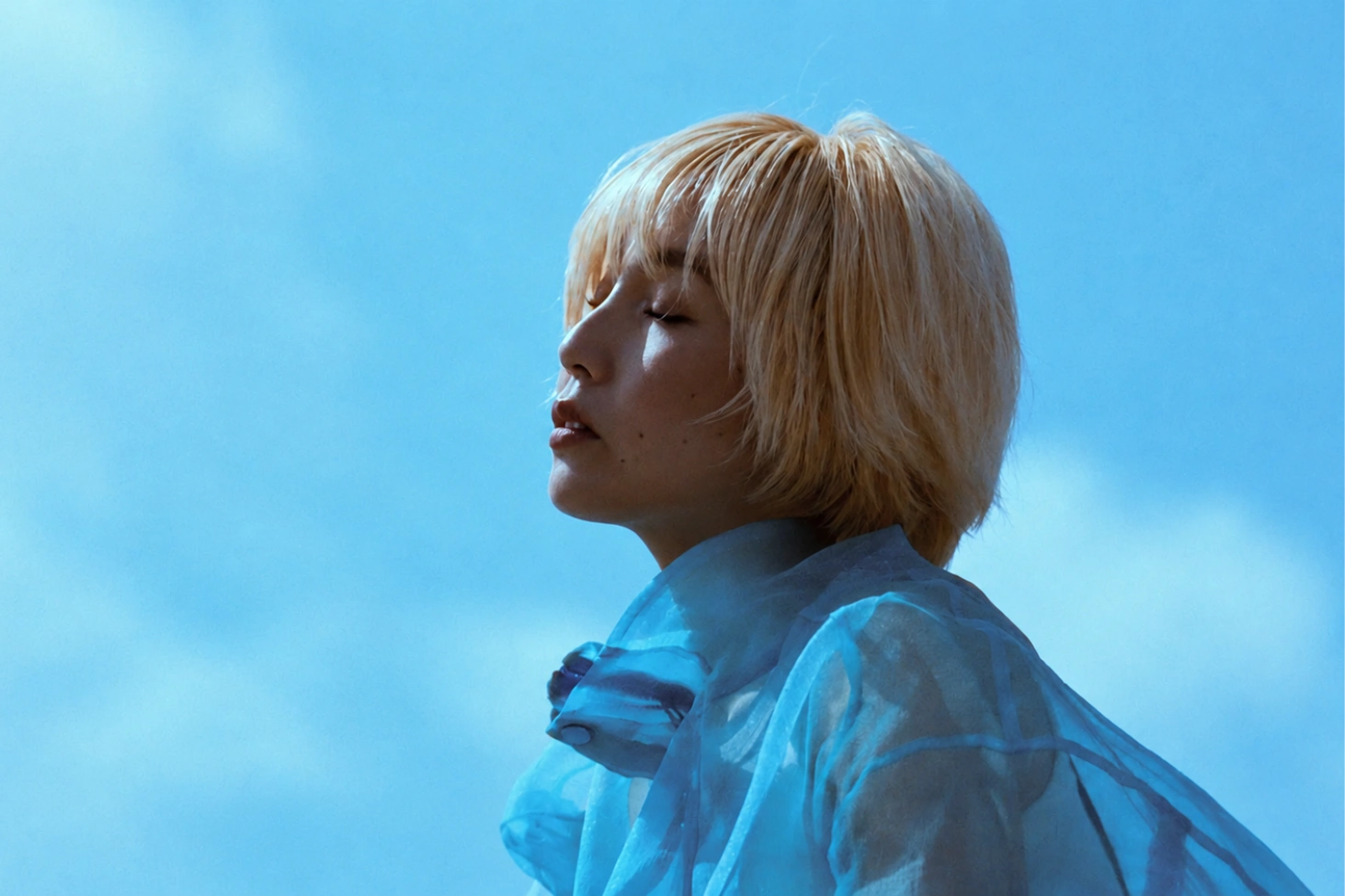





Butcher Babies’ Heidi Shepherd Contemplates Loss, Friendship, and Family

Being baptized in Faygo at the unholy Gathering of the Juggalos unlocked something in Heidi Shepherd.
“Oh my gosh, where do I even begin?” the Butcher Babies singer wonders as memories race in her head of playing Insane Clown Posse’s annual brouhaha in the middle of Missouri this past August. “As soon as we pulled in, I knew what we were in for.”
More from Spin:
- Kacey Musgraves Revisits ‘Uncertain, TX’ With Intocable
- War On Drugs’ Robbie Bennett Readies Two Solo LPs
- Writer Nik Cohn Collects 60 Years of Nonfiction Into ‘Corner Boy’
She quickly fires off the most potent memories: A guy covered in peanut butter in the pit. The blue smoke bombs that went off during the Butcher Babies set that “looked like something out of ‘Mad Max.’” The crushed water bottle that whizzed by her head, only because it was one of the tamer projectiles that could have been hurled. “We knew, of course, they were going to throw stuff at us. It just depends on what they throw at you. If it’s hot dogs, you’re fine. But if it’s human feces, you’re not fine,” she jokes.
It was the third time Butcher Babies played the festival, but Shepherd’s first time ever seeing ICP, “and it was such a unique experience,” she attests. “I loved it.” What really stands out about it is not the sticky film of soda still lingering on her tour clothes, but rather the stick-together community she encountered throughout the entire event.
“What’s so beautiful about it is that it really is like a family,” she says of the atmosphere, recalling how when she and her bandmates stood by the soundboard to watch ICP, many of the Juggalos came up to offer bottles of liquor as a peace offering. “If they love you, they’re going to ride for you. They’re going to look out for you. And I just thought it was really sweet. I’m so glad that we’re entrusted to go in front of their fans. They gave us such a warm welcome.”
The Gathering was the first date on the band’s latest tour to promote new album Nightbloom, and the feeling of belonging was something Shepherd really needed to kick things off in the right way.
The past couple of years haven’t been the easiest for her or Butcher Babies. In 2024, founding band member and Shepherd’s long-time co-vocalist Carla Harvey dropped a bomb when she announced she was leaving the metalcore group she had helped establish in 2010. Nightbloom is the first album without Harvey and in many ways, Shepherd says, “I feel like a debut album. I can’t really compare it to anything that we’ve released in the past because it’s so different.”
Not only was there taking the project from two vocalists to one, but there are some apparent stylistic swings, too. A song like the defiant lead single “Blame It on the Wind” is downright pretty, with Shepherd tapping into a sing-song delivery that even infringes on the borders of pop. There’s also the slow-moving “Leaving California,” about Shepherd uprooting from the Sunset Strip to the Vegas Strip, that’s probably the closest Butcher Babies has ever gotten to a ballad.
“I was nervous about it,” she admits. “There’s still a lot of heavy stuff on this album, but I wanted to write with a purpose … and we did a lot of stuff that we really couldn’t do with the old integration of this band. But the reaction so far has shown me that we made the right decisions. I can’t help but look at all the struggles that have come up over the past several years and think, okay, this is how it was supposed to be.”
It’s still hard for Shepherd to talk about the breakup between her and Harvey, who initially stepped away from the band to recover from a serious eye injury and later revealed in interviews that she felt “kind of squeezed out” as Butcher Babies continued touring without her. Harvey has since formed the musical group the Violent Hour with her husband Charlie Benante.
“I think the hardest part about it all was really just the loss of a best friend of 20-something years, you know? I didn’t know it was going to be so hard,” Shepherd says, comparing it to a kind of death. “I had this link on my arm, a BFF right here with me for 20 years. And now it’s like, where do I stand as an individual not attached to that? It’s still something that I have to look at and think, will I ever get to that friendship again with someone else? Or is that friendship gone forever?”
While Shepherd hasn’t explicitly said which songs on Nightbloom may have been inspired by the fissure, you can hear some possible post-mortem reflections in the rock crescendo of “Sincerity,” which talks about an important connection “sealed with a blood pact” and then “lost in the blink.” Or the power metal track “Are You Waiting Up?” wherein she wonders “do you think of me at all” and pleads that she wants to “do anything to make this right.”
The dissolution was a tough pill for many fans on the outside, too. The heart of the band has always been the yin-and-yang duo (one blonde, one brunette; one with high-pitched shrieks, the other with guttural growls; one from Detroit Rock City, the other from a Mormon community in Utah) who, together, moved the needle for women in extreme music. “When we started, there were not very many females in this industry. There were some and they were clawing their way, and [we] just jumped in with them and put claws out, too,” says Shepherd. “It was years of hard work and people telling you no, and you telling yourself, yes.”
But the connection between the two women was even purer than that, rooted in a real ride-or-die friendship that was forged long ago by two Hollywood transplants who loved metal music and wanted to change the rule book on women’s role in it. Their chosen band name was inspired by predecessor Wendy O. Williams of the Plasmatics and her song “Butcher Baby.” And for nearly 15 years together, they carved out a unique niche that made them a proverbial giant from the get-go with their debut album Goliath, and took them everywhere from Knotfest to Hellfest.
Even with the transition, much of the music-writing process has stayed the same, says Shepherd. That always started with her and guitarist Henry Flury (a fellow founding member of the band and Shepherd’s romantic partner). “Henry and I have been together for 15 years, we’re each other’s creative partner, so that part was the same,” she says about making Nightbloom, and ultimately conceding that the changeup was in “the best” interest for the band.
“When somebody decides that all the years and all the work and stuff that you put into something, that they’re finished with it, that’s fine. And I have had to keep telling myself, that’s okay. I respect it. But my journey is not done. Henry’s journey is not done. And I feel like I have a duty, not just to myself, but to our fans, to our managers, to our agents, to our lawyer, people that have been with us for almost 20 years. This is so much bigger than two people. This is so much bigger than five people. This is so much bigger than a band. I had to look at it and say, all right, we need to keep this going. And honestly, I feel stronger than ever.”
But there’s still moments of vulnerability too. The more Shepherd digs into the breakup, the more tears well up. She instantly apologizes for “the waterworks” that threaten to ruin her thick eyeliner and lashes that need to be strong for the rest of the day. It’s just a few hours before Butcher Babies will embark on a busy radio promo day where the topic is sure to come up again. For now, though, the band’s tour bus is sitting idle in the middle of a Planet Fitness parking lot in Milwaukee, Wisconsin, and Shepherd uses the safe space to open up more.
“All of it is initially why I went into therapy,” she continues, wiping away a few stray tears as she sits up straight and regroups. “It was the first time ever in my life I did so and it helped me understand so much about myself. I really should have been doing it, probably since I was a kid.”
In the talk sessions, Shepherd accessed a lot of repressed trauma and emotions she had shoved deep down in her emotional suitcase for decades. It went beyond lost friendships to access the layers of self-image, religious dogma, and self-imposed shame inside her psyche that were catching mothballs. She also purposely shut off social media for a year to silence the outside chatter that was picking up with the latest news. “I needed the noise from the world to kind of just go away so I could focus on finding out what is me over the last 20-something years. And not what society tells me is me, not what friends have told me is me. Not what a church has told me is me.” The clarity she gained helped her unravel the complicated webs of several other key relationships in her life, many of which were also dissected into song on Nightbloom.
The mournful melee of the album opener “Lost in Your Touch,” for example, is about trying to move on from a relationship and swirls around circumstances of Shepherd’s early marriage at 19 that ended in divorce just a couple of years later. “I think it was something that I harbored in my heart for so long, and something that I didn’t realize was still kind of, not necessarily nagging at me, but looked at as a failure. I got married in the Mormon Temple where you do not get divorced, and if you do, it’s a way to be shunned from the society. And it really became that,” she explains. “There were a lot of people that looked down on myself and him, for allowing something that we promised to ourselves and our families and the Lord to go down the drain. But I look at it now, and I realize that it was a growing opportunity, and had it not happened, man, my life would be completely different.”
While Shepherd has since left the church, there are still family members tied to the community in Provo, Utah. “It’s a very Mormon culture, whether or not you are a member or still devout,” she explains. That connection weighed on her in the early days as Butcher Babies was getting its footing and the frontwoman wondered what effect any opinions would have on her family, especially her mother, Lisa, who serves in Utah’s House of Representatives.
“I was always worried that what I do would hurt her campaigns or hurt how people view her own beliefs within her politics, but she’s stood firmly in her support of me and knowing this is hard work. I’m closer with my parents now than I ever have been,” says Shepherd, adding that her father Phil, who works in the film industry, has helped on all of Butcher Babies music videos. That cushion of support is the basis of the Nightbloom song “Black Dove,” in which the singer praises her family for always having her back. “Instead of the ‘black sheep,’ my family considers me the ‘black dove.’ Like, we give her wings. She has our blessing to go fly. I’m super grateful for my family, and every time I go back to Utah and Provo, I can hold my chest high.”
In fact, the last time Butcher Babies played Shepherd’s home turf, she had the chance to see her mother work on the House floor and was changed by the experience. “I got to see the whole process and it was incredible. There’s so much that goes into it. And everywhere I went, my mom wanted to introduce me to everyone, like, ‘This is my daughter Heidi, she’s in a heavy metal band. They’re playing at this theater down the road.’ So yeah, I’m so grateful that they’re very supportive of me and this band. It took them a couple of years to see what it really was, but once they did, they were like, oh, you belong here. You’ve always belonged here.”
Heavy metal culture wasn’t exactly a common thread in the Shepherd household. While there was always music, it was more of the Osmonds and Bee Gees flavors. As Heidi was growing up, she too was more interested in running laps than running on stages. Shepherd was a decorated track and field athlete and even competed in a Junior Olympics event in Moscow. Funny enough, it was on one of her training bouts that she first encountered the local skate park that changed her course forever.
“I used to go on long runs down in the Provo River canyon area and the skate park was such a huge thing during those years. That was when Blink-182 was getting big and all the skater lore was so huge. That’s where I would spend most of my practicing,” she sheepishly confesses. “It was where I was first introduced to nu metal and I’d see kids in Slipknot shirts and Limp Bizkit and Korn shirts. It was a different world than anything I’ve ever seen before. I needed to know what Slipknot was because it kind of scared me with the masks. I remember seeing that ‘All Hope Is Gone’ T-shirt where they were all in the field and being like, what is this?” she says, laughing at her naivete.
But the music spoke to her and how she felt inside, and Shepherd would beg for and borrow CDs that she could play in her own company on her Discman—or so she thought. “One time my mom found a Korn album in my closet. She broke it in front of my face, and was like, ‘You cannot have this!’ But she loves Korn now. She’ll stand side-stage to watch them.”
One of the metalheads Shepherd met back in the day at the skate park was the bass player in a band called Pandora, “or something loosely riffing off Pantera,” she doubles back, trying to remember. Either way, his mom was also involved in politics, and because of this technicality, Lisa let Heidi hang out with the teen and go to his shows about town. “That was really my huge introduction to live metal. And I just fell in love with it, and it became a piece of me.”
If there’s any dissertation of Nightbloom, it’s studying how to find all those pieces again—happy, broken, and even forgotten—and Frankensteining them together to create a new whole. “This album is a reminder that not everything beautiful needs perfect sunshine to flourish,” says Shepherd. She symbolizes that idea in the song “Broken & Beautiful,” which fully completes the story arc of her latest chapter.
“I realized that putting these pieces together, these things you consider a failure, they could actually be considered a win,” she says, comparing it to the Japanese art kintsugi, where broken ceramic is glued back together again with gold-encrusted lacquer in order to be given new life and purpose. “It’s about reframing this as beautiful pieces of your story that complete the whole rather than view them as broken bits. I’m grateful that I was able to go through the therapy and look at these things as a growing opportunity,” she says. “I’m grateful to still be up here doing this thing I love. I’m 41, but I feel like I’m that 23-year-old starting this band again, writing my debut album like it’s all fresh and I’ve got something huge to prove. Maybe I still do.”
To see our running list of the top 100 greatest rock stars of all time, click here.
What's Your Reaction?
 Like
0
Like
0
 Dislike
0
Dislike
0
 Love
0
Love
0
 Funny
0
Funny
0
 Angry
0
Angry
0
 Sad
0
Sad
0
 Wow
0
Wow
0