






























A New Exhibit Visualizes the Influence of Music on the Art of Norman Lewis

The link between art and music is integral, and in the case of Harlem-bred abstract expressionist painter Norman Lewis, it was foundational. Lewis’s love of jazz in particular was a central inspiration for his work, reflecting the struggles of and triumphs of Black urban life with every vibrant stroke, line, and hue.
As New York’s Michael Rosenfeld Gallery showcases “Jumping Jive,” its seventh solo survey of Lewis’s work, the space is highlighting the link between visual expression and environmental revelation in an interactive way that exemplifies how an art space can keep patrons engaged by thinking outside of the box—both from a business model perspective and from a creative one.
More from Spin:
- Phoebe Bridgers, boygenius Reunite For ‘Sound Check’
- Alanis Morissette Gets Festive On First Holiday Album
- Judas Priest Bassist Ian Hill Announces Retirement After 56 Years
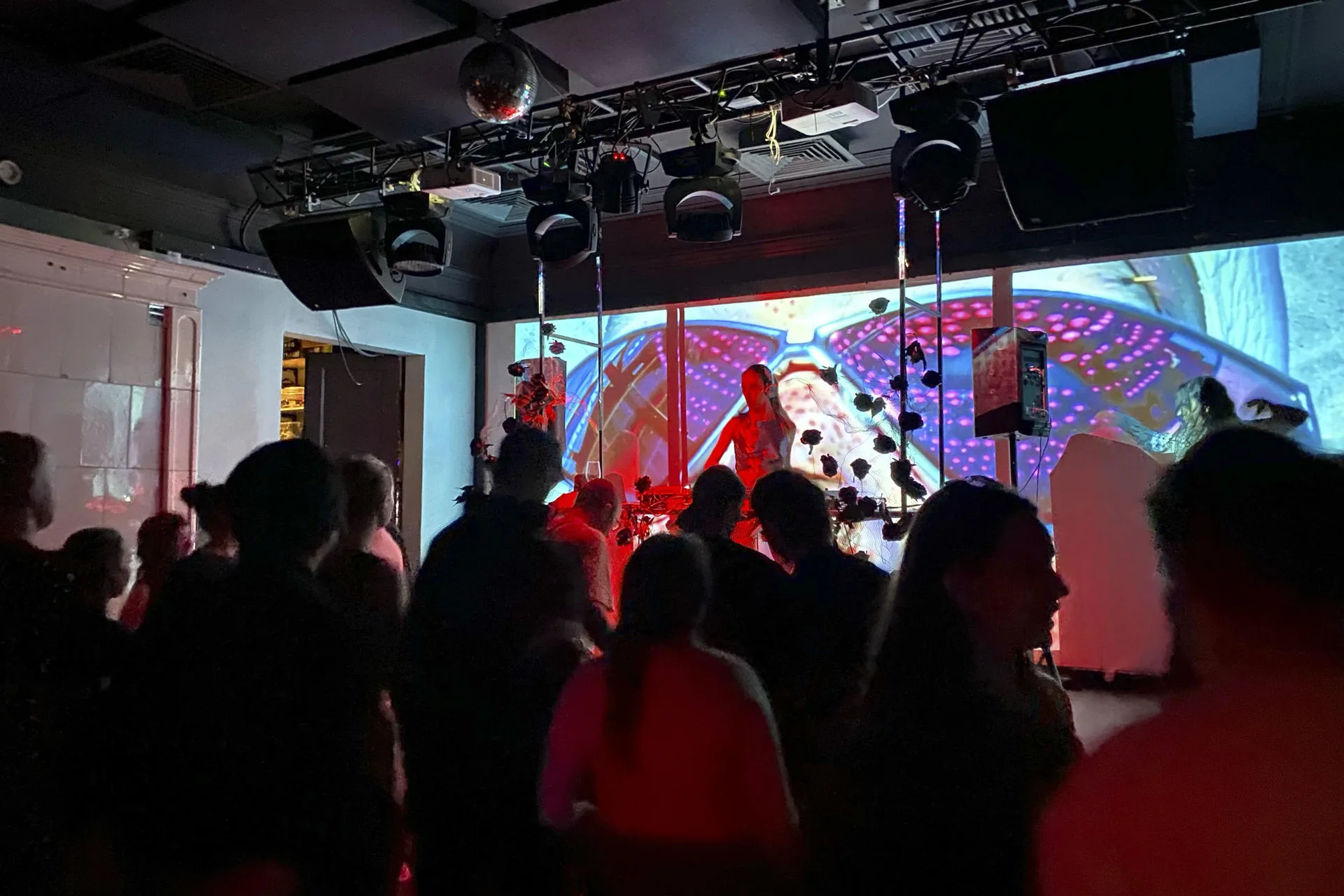
Lewis died in 1979, but Rosenfeld is keeping his spirit alive in a multifaceted way with help from StarRock Productions (who specialize in experiential events and music bookings) and DJ Adrian. The entirety of Lewis’s vinyl record collection is displayed in the space, used as both visual enhancement and for a curated soundtrack informing the works on the walls from behind the decks.
SPIN spoke with the gallery’s director (and Rosenfeld’s partner), Halley K. Harrisburg, to delve into the experiential elements of its latest exhibit and discuss how aural components like this can bring new dimension to art events, and to the art community as a whole. 
Norman Lewis was a prolific painter whom your gallery has featured often. This is his seventh show there. What is it about his work that speaks to your gallery’s mission and its patrons’ tastes?
Yes, we have included his work in numerous group exhibitions, too. We’ve devoted an enormous amount of time, energy, and thought around his work, researching and archiving. In more recent years, we began representing his estate, and in partnership with them, over the last 10-plus years, we’ve also been able to push further because we have so much more archival resources available to us, like the artist’s sketchbooks and the artist’s record collection.
Norman is an artist who evolved throughout his career, decade to decade, pushing and contributing so meaningfully to American art, and he’s the kind of artist that Michael and I like to get behind. He was always experimenting, and he was always redefining, in a sense, his craft and his hand. And so, this exhibition allows us to look at his work through the lens of music, and to give credit and importance to what was playing in his studio.
Is this the first time you’ve highlighted the link between music and art in this way at the gallery?
Yes, we’ve always talked about it and have always acknowledged the importance of music to Lewis, in particular. Often his titles will refer to a specific song, or a recording artist, or a musical term. Also, the way in which he embraced abstraction and his use of calligraphic lines, rhythms, or things in procession. We’ve talked about the role of jazz and improvisation, and how that translated to an artist in their studio. Michael Rosenfeld has wanted to explore this for quite some time, and the only reason it was delayed was that it took us about two years with our archivist to document the extensive record collection. 
How many records are there and what shape were they in? How do they represent Lewis himself?
It’s almost 500. They were all catalogued like you would a book, then my archivists spent weeks and months cleaning them. The majority were in great shape. Some were broken, and we’ve replaced a lot of those albums. They’ve helped us to better understand Norman and his interests, his range in music, and therefore, they’ve helped us to present a more cohesive exhibition and thought around the role of music.
He also was a pianist, self-taught. Music was very much part of his world, and so having the collection with us, we thought, wouldn’t it be amazing if we could have a DJ present during the exhibition who would play from his collection? There is an area that we’ve designed for the DJ with about 60 record covers that are on display, and the DJ pulls from there. Every weekend, he is replacing them so the audience gets to look at them even on days that he is not here.
Are you involved in the song selection process? How do you maintain the additional sound element when the DJ isn’t present?
We have given DJ Adrian complete freedom to play and to make a wonderful set, and he has organized it himself. He came in and spent days with us before the exhibition, getting himself more familiarized with the albums. He’s organized them by date and by artist, so that he’s able to pull and grab. Every Saturday, he plays a set for three hours. It’s recorded and then we use that playlist for the week ahead. We also release the new playlist on Spotify every Wednesday. By the end of the exhibition, there will be 10 playlists. 
How have the musical elements contributed to the gallery’s atmosphere?
It’s been fun for me—whether it’s the live set with DJ Adrian, or when the music is playing throughout the week at the gallery—to just sort of see how it makes our visitors feel. Their body language is so much more relaxed, more with the music and the beat. I think it’s been a great audience experience having this collaboration.
Norman’s daughter visited last Saturday with her husband, and it was a very emotional reunion for her. It is to her credit that these albums and this collection exist because she has been the caretaker and steward of Norman’s legacy.
What genres are represented and what stands out?
There’s everything from bebop and blues to disco, funk, and reggae. So it’s been illuminating. [This collection] stayed with him and we can see that the records were used and loved from their condition. There’s a wonderful work on paper in our show called “Ode to Duke.” We know that he was thinking in some way about Duke Ellington when this work was executed. Those connections, I think, are what led us to this place where we felt like it warranted a solo standalone exhibition looking at music.
Arts often suffer in tough economic times. Michael Rosenfeld has been around for 37 years. How has the gallery navigated ups and downs and maintained the business side?
I do think that we often see a greater audience in times that are difficult because people are seeking experiences. We’re all fully aware of volatile markets. We’re very fortunate that we specialize in American art, generally coming in around 1915 to 1975. That’s sort of our sweet spot and there is still so much growth and opportunity in the areas that we have been involved with. For an artist like Norman Lewis, who’s incredibly established in dozens and dozens of the best institutions in our country, the market has still not fully reached its potential. At the end of the day, I think that what we’re seeing right now is that great art is selling and people really want the best of the best, and Norman Lewis falls within that category.
In the current arts landscape, how can interactive elements like this help get people into the gallery to appreciate what you do?
I think that we live in a culturally dense city, and we are competing for an audience’s attention, and there are so many opportunities on any given day or evening to have a very full cultural meal. So for the collector or art historian or art enthusiast who liked or knew Norman Lewis, it’s a wonderful opportunity for them to come and have a different kind of experience and have a further understanding of his work. Same for someone else who may not be as familiar with the artist but loves music. Music has allowed them an entry point… It’s part of our job representing an artist to expose and to educate on all the aspects of their life and career in a very palpable way. This exhibit aligns with our educational mission.
“Norman Lewis: Jumping Jive” runs through November 14 at the Michael Rosenfeld Gallery, 100 Eleventh Avenue (at 19th Street) New York, michaelrosenfeld.com
To see our running list of the top 100 greatest rock stars of all time, click here.
What's Your Reaction?
 Like
0
Like
0
 Dislike
0
Dislike
0
 Love
0
Love
0
 Funny
0
Funny
0
 Angry
0
Angry
0
 Sad
0
Sad
0
 Wow
0
Wow
0



.jpg)