













What Happens to Art When the Musician Becomes the Product?

“I think that something awaits me in the divine for resisting.”
More from Spin:
- JAŸ-Z Chooses Himself For Super Bowl LXI Halftime
- 1978 David Bowie Show To Fuel Immersive Experience
- KISS Reliving Final Tour In New Documentary
— Chris Fleming, on not having a podcast
When I was 15 I had a Saturday job at a record store. I’d take the bus into town and spend the day stamping mail-order envelopes, pricing inventory, and reminding parents looking to buy a ukulele for their child who “wants to learn guitar” that they’re not interchangeable and are, in fact, totally different things.
This job was the highlight of my week and I felt sorry for everyone who wasn’t me, employment-wise. I’d make cups of tea to Primal Scream, alphabetize the sale rack to John Martyn, eat lunch to Broadcast, and dust shelves to Jessica Pratt. And sometimes, to my shy delight, I’d have the privilege of handing a stack of pre-ordered CDs to PJ Harvey. Whenever she came in I’d make a mental note of what she was buying and listen to it later. I was privy to the private musical diet of a legend, and I took it seriously.
I knew little about her, only what she allowed to be known through her own records and what I could imagine she was looking for in the ones she chose. I didn’t know what her songs were about, what she read, who she loved. I couldn’t, and it was addictive.
It occurs to me that the art I feel close to is more often than not made by people I don’t and will never understand. Exceptional, lasting things are made by exceptional, irregular people, orators of something separate from reality. It’s a remarkable kind of closeness, to have distance from a person who makes things that feel personal. And it’s a dying feeling.

“If I’d known more about the bands I loved when I was younger, I don’t think I’d have loved them half as much.”
— my mum, on learning that I don’t like Morrissey
We’ve been advised never to meet our heroes, but recently the script has been flipped. It’s being drummed into artists across the board that, in order to maintain momentum and longevity, we should be pushing our personalities as much as our work, ideally even more so. The new musical landscape (in which 84% of the Billboard Global 200 went viral on TikTok first) necessitates constant sharing. “A balance of authenticity and storytelling” is advisable, with a focus on “personality and journey,” “underdog narrative” (what) and “light promotion” (the core tenets of the RPC Method by industry strategist Joey Dean.)
“You’re funny, be funny!” This kind of suggestion rarely works to motivate me. Similarly I have never felt calmer after being told to calm down. The requirement to peddle “authenticity” is somewhat of an oxymoron. “Be yourself! Just please use a ringlight and hook them in the first three seconds and stay on brand!” And herein lies the rub—the disharmony of creating both authentic art and a marketable version of ourselves is furthering the dissolution of artistic curiosity, from both sides. The artists are told to reveal themselves, and the fans are taught to expect this self-revelation constantly.

“Secrets are lies, sharing is caring, privacy is theft”
— tech monopoly mantra in The Circle, Dave Eggers
When I was 25 I moved from England to New York on a depressive whim. The first six months were a dream. Within the year I had sewage coming through my ceiling, a tumor in my finger, and writer’s block. I started to wonder if, in doing what I thought was good for me, I had actually done the complete opposite.
A key factor in this discontent was the advent and evolution of social media marketing, namely the pressure of every experience having “sharing” potential. Things I’d previously done for myself or my work—playing guitar, reading, DIY—started to become less about doing and more about being seen to be doing. I felt I was letting myself and my project down constantly, that by not sharing my life I was wasting it. I could always be doing more and it made me want to stop completely.
“I didn’t used to think about myself this much. And now it’s all I do,” I whisper down the phone to a friend after consuming a hero’s dose of THC. “Help.”
When what you do is inextricably tied to who you are, the line between the product and the person is blurred irreparably. I would pay to never hear the term “world building” again, and I’d pay double to go back in time and pull a Daft Punk—facelessness might provide some distance between myself and my work, but I can’t afford for them to be separate. Or I can but guiltily and, I’m reminded, to my detriment. I’ve finally lived long enough to see something massively change—the way we find and value artistic output has shifted, at least for the vast majority of artists. And the constant sharing of ourselves is puncturing the process of absorption and creation, at least for me. In the words of Tim Kreider, “you can’t write—or live—if you imagine the whole world watching over your shoulder … which, thanks to the internet, it now is.”
The music landscape is beginning to feel like one of those conveyor belt sushi restaurants, a congealing parade of hot takes, AMAs, and #FYP. I’ve always felt that, by writing and releasing music, I’m becoming closer to both myself and the world. Recently I’ve been feeling that, by participating in the game of online self promotion, I am standing inside the mouth of a predator, wearing a shirt that reads “love me” and a smile so wide it hurts my face.
The challenge right now is simple to define but complicated to navigate. D.W. Winnicott puts it well: “Artists are people driven by the tension between the desire to communicate and the desire to hide.” How do we survive without subscribing to the “24/7 news” model of the moment?
There’s a new breed of musician that has spawned from the late-capitalist hellscape of the current music industry. It’s someone who knows, accepts and navigates (with ease) the multi-dimensional headfuck of being at once the creator, the promoter, and the product itself; who can handle fulfilling the insatiable appetite of an algorithm (that doesn’t favour music “content”) and not lose their sense of self along the way. Playing the game to climb the ladder has always been the case. That the ladder itself has become unstable and sprouted a thousand more rungs is the difference.

“Maybe what you consider success wouldn’t be success to us.”
— Stephen Malkmus, to MTV
I support myself entirely through music and have done for the past 10 years. This is rare. It’s fucked up how rare it is and all the reasons why it’s rare are fucked up, too. The music industry has never been a meritocracy but it’s getting weirder, and the goalposts keep shifting. There is something good about this new landscape, though, which is hard to recognize since it’s also the thing that makes it so confusing and exhausting: There are so many ways to define success.
When my first album came out I was averaging a million monthly listeners. On tour I’d play 80 cap rooms and, on good nights, sell them halfway. Then, it didn’t feel like success. Now, I see that it was. I have friends who make their only real money from touring, and I have friends who are doing a great job of keeping up social media buzz but are doubting their survival in the event that TikTok disappears. These people are all successful, too. I wonder if they feel it.
That I continue to support myself through making the music I want to make means I am succeeding, but there are so many ways to calculate success (and therefore failure) that this endeavor can feel disheartening a lot of the time. That it’s considered wise to pay attention to the algorithm (rather, unwise to ignore it) feels like a sick game where “good” and “worthless” are no longer dependent on anything other than checking the boxes of the week.
Social media used to be a choice. Now it seems to have eclipsed us. Omnipresent, omniscient, omnipotent. These are, historically, monotheistical descriptors of God. That they fit so well in this new context is undeniably creepy. Art used to be considered antithetical to the status quo, a rebellion of or simply just a break from it. Maybe I’m romanticizing a time that never existed. But if it ever did, and doesn’t now, I think it can again.
It would start with shifting some of the weight we place on social media into different areas of the music conversation. We can’t make it less of a trap, that’s its nature, but I sense we’re tiring of it (see: popularity of Brick). So the question becomes: How do we strengthen the environments and practices that social media damaged in its bid for domination?
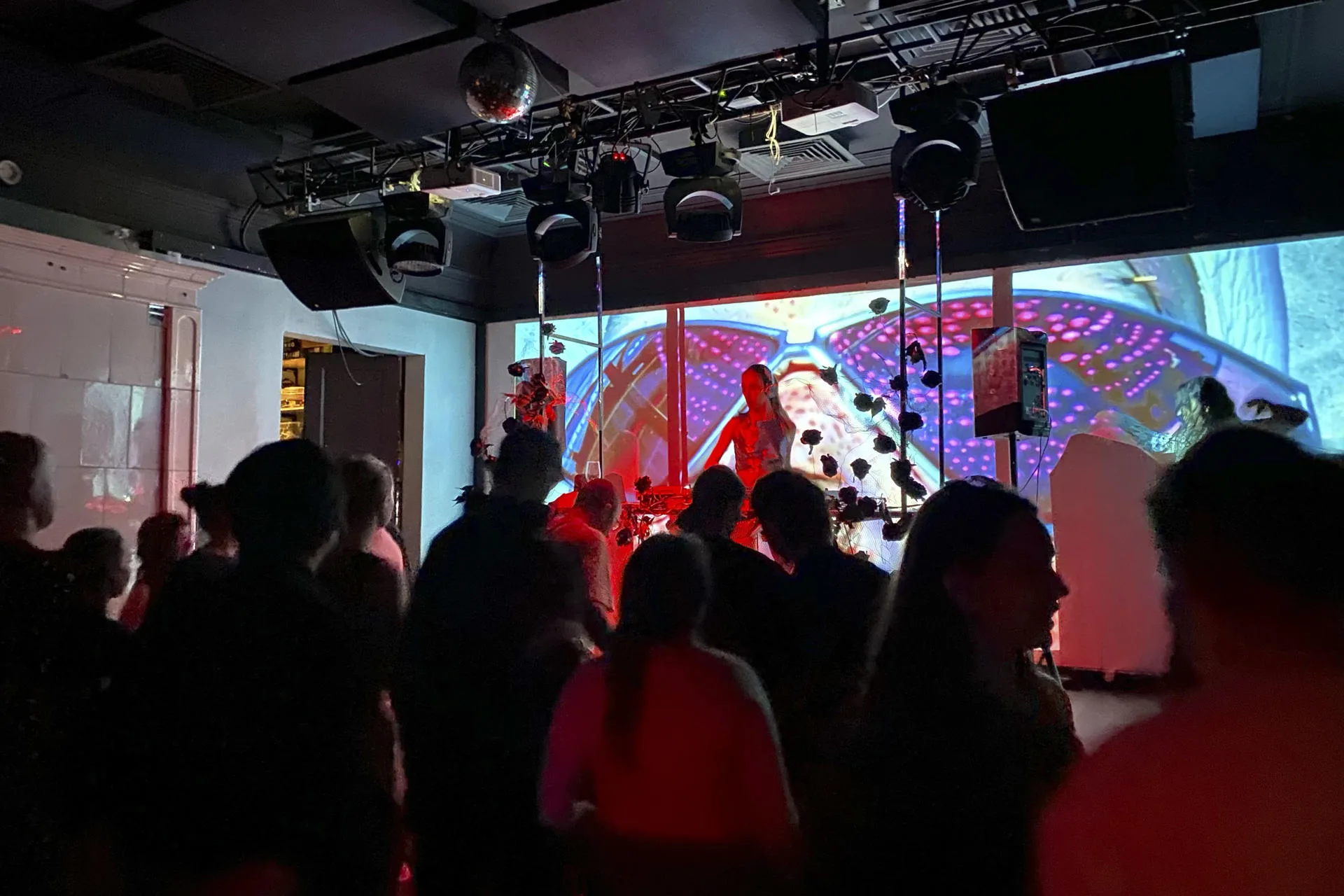
Reversing the passivity of consumption in music is important for us all, artists and listeners alike, and a step in the right direction would be a conscious move from the digital to the physical. Not entirely, but intentionally. Investing in physical media, going to shows, connecting in real time.
We would all benefit from putting some energy into rehumanizing the music industry, making space for wondering and for waiting. It’s legwork, it’s leaving the house, but we’re inching closer to a reality where music is disposable, dispensable. It doesn’t have to be inevitable, it’ll just take some trying.
To see our running list of the top 100 greatest rock stars of all time, click here.
What's Your Reaction?
 Like
0
 Dislike
0
 Love
0
 Funny
0
 Angry
0
 Sad
0
 Wow
0