
























The Scratch Have Always Been Itching to Do Something Different

It’s only six days into the Scratch’s first proper U.S. headline tour, and it’s clear they’ve already gone astray when we meet up in Chicago. As the Irishmen come down from a late soundcheck and settle into their bandwagon for our interview, they start swilling cans of “America’s finest” Bud Light and Coors like they’re some kind of exotic find.
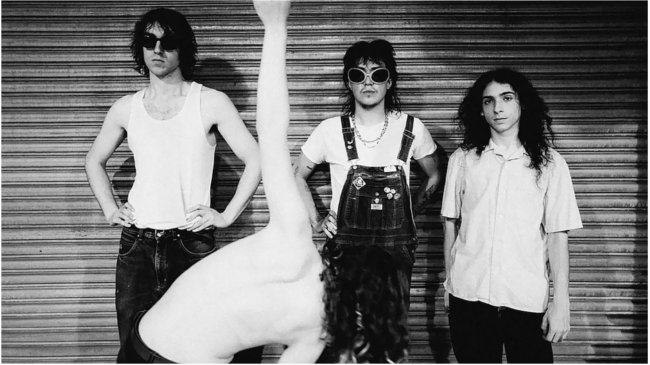
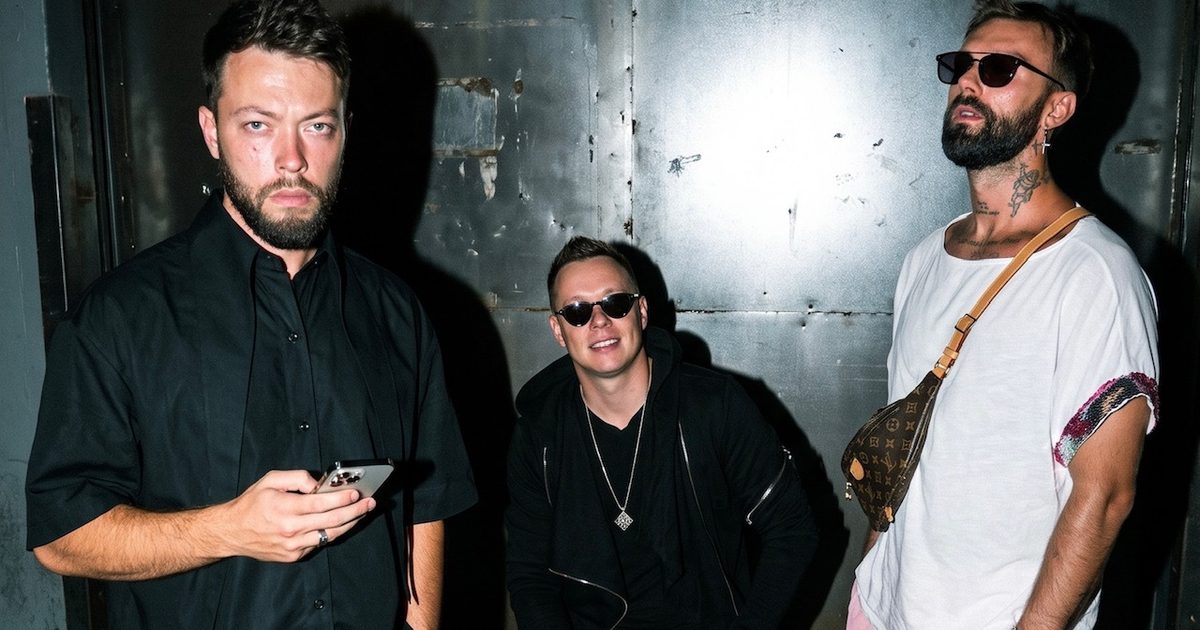
“People seem to think that we are eager for Guinness everywhere we go. We get enough Guinness!” jokes Gary Regan in his thick brogue as he offers one my way. The guitarist, who joined the group in 2024, is its newest member. With his cropped blonde hair, baby bangs, mustache, and a pair of bright blue eyes obscured by wide-rimmed glasses, he’s also got one of the more distinctive looks of the no-fuss group, largely made up of former buskers who used to rile up the streets of Dublin while only dreaming of the day they could come to America.
More from Spin:
- Jack White Unthaws New LP ‘Frozen Charlotte’
- JAŸ-Z, Eminem Reunite On Rakim/Kurupt/Masta Killa LP
- Sylvan Esso Is Feeling ‘Hot’ On New Song
“We’re actually pillaging the USA for every one of their beers,” jokes bassist Cathal McKenna, his arm resting on the ledge around Regan in a kind of brotherly gesture. He’s another newish member who joined in 2022. And as I’ll soon discover, he’s a total banshee on stage, often shirtless and perched on a stool or some other makeshift platform, his shoulder-length hair thrashing about his body as he brings a barreling rhythm to the band’s hybrid performances of traditional Irish folk and modern metal.
Sitting next to me is guitarist Conor Dockery, one of the original members who co-founded the band in 2016. Percussionist Daniel “Lango” Lang is skipping the interview to spend some quality time with his girlfriend while she’s in town. In just a few hours, he’ll make his presence known on stage where he animates the shows by playing the cajón, a box-shaped drumming alternative that he hammers into by slapping the front with his hands or a pair of hurls, the Irish equivalent of hockey sticks.
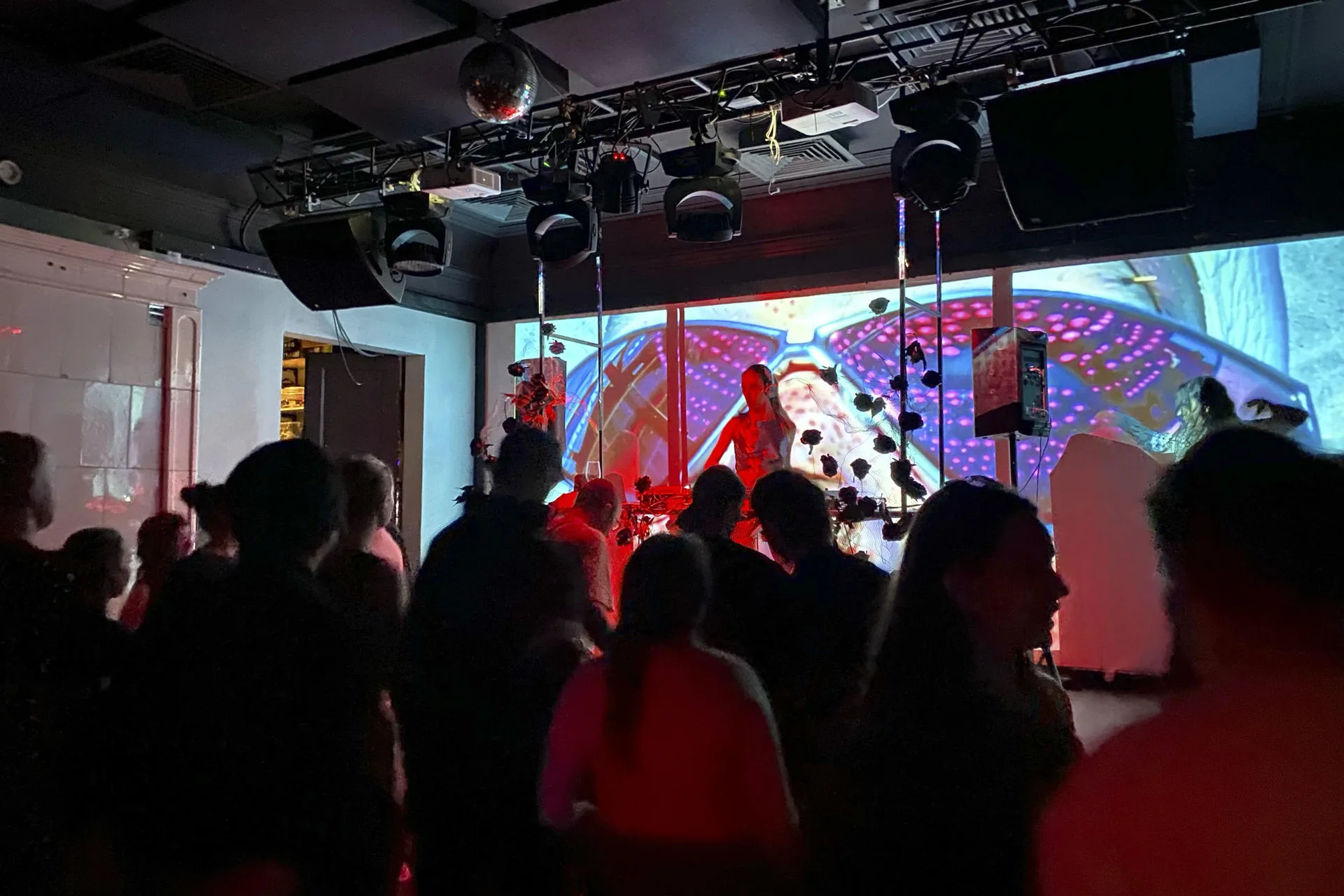
These gents are used to putting their blood, sweat, and tears into every performance, which you can tell from the days-old tour essence wafting about in their current home-away-from-home. In just a few hours, they’ll do it all over again, decimating the stage at Chicago’s Subterranean with their feverish and oft-kilter style of music that’s gotten more well-earned buzz after releasing a new album Pull Like a Dog in March.
The title was ripped from a speech by Irish rowers Gary and Paul O’Donovan, who claimed the country’s first-ever medals in the sport at the Rio 2016 Olympics and quickly became overnight sensations for their underdog accomplishment. When asked in one interview how they did so, the pair replied, “Close your eyes, and pull like a dog.” That trust-your-instinct mentality became ingrained in the minds of the Scratch, who have been relying on theirs ever since forming the group from the burned-out ashes of a previous metal project called Red Enemy.
“We all grew up metalheads and played in metal bands or just heavier, more math rock-leaning acts … but the Scratch was basically a group of mates that got a little bit tired of the metal scene and that whole world. We just got jaded by it, and wanted to do something different,” explains Dockery. He comes off as the most straightforward and verbose of the bunch—witty but also downright serious when he gets to talking about the unplanned genesis of the band, which really began with rediscovering their roots.

Like the Hu and Bloodywood and their own personal heroes, System of a Down, the Scratch is built off the unique combination of hard-chugging metal and the hallmarks of centuries-old folk traditions that are rich in their homeland.
“One day, we just found ourselves in a room together, all discovering Irish folk music, really for the first time. We were delving into the worlds of Planxty and Bothy Band and Christy Moore and it just clicked in a very natural, unplanned way,” Dockery adds.
When the band took the stage at Subterranean later that night, they gave a hint of that lineage in the set list. Sandwiched in between crushing originals like “Gladrags” and “Cheeky Bastard” are the old Irish working song “McAlpine’s Fusiliers” and Christy Moore’s “Joxer Goes to Stuttgart,” which Dockery performed on acoustic while other members took a pause, sitting on the floor of the venue and singing along like they were at a pub back home. “This was me and my dad’s favorite song growing up. I lost him last year to cancer, so I started singing this in the middle of the set to remember him,” Dockery explained before launching into the ballad.
Another essential Irish folk band that left their mark on the Scratch was Interference, a large Irish collective that has close associations with Glen Hansard and the movie Once. The troupe is featured in the beloved John Carney movie, during the lively house party scene where they play the song “Gold” with the spirit and energy that epitomizes Irish trad music.
“Actually, the first Scratch song ever written came after Lango and Jordo, our old guitar player, were learning the Glen Hansard cover of ‘Gold,’” Dockery remembers. The two learned the song in the original arrangement that Hansard plays it in, a D-A-D octave with an open D tuning, which they still use 90% of the time today. Suffice to say, it was a watershed moment for the band.

“I remember after the lads wrote that early instrumental piece, we were trying to figure out how to finish it,” Dockery adds. “So, we took a section of our old metal band and put it at the end of the song and played it in an acoustic manner. That was the realization that these two worlds actually aren’t a million miles away. It’s all a rhythm. It’s all about having a groove.”
What’s transpired since that early lightbulb moment to Pull Like a Dog is “10 years of progression,” says Dockery. “Ten years of solving this equation in the production of, how do we mesh these two worlds together so people aren’t so confused by it that they are scared away?” he adds, laughing. “But we realized early on that we touched on something really interesting. And if we could get it right, it would be a unique thing that I don’t think I’ve ever heard before. That’s what kept it interesting and exciting, like, what we can do on the next album? Where can we take this?”
With two EPs and three full lengths now in their arsenal, the Scratch has thrived off that mindset—and been rewarded with a growing fandom that has taken keen interest in what they are doing. After Dropkick Murphys shepherded the band by tapping them for support slots in recent years, the Scratch’s reach has started to expand well beyond Ireland. Most dates on their U.S. tour have been sold out, or close to capacity, with crowds lapping up the sets with a fitting mix of circle pits and singalongs.
The buzz has reached further into the inner echelons of the music world, too. Mastodon’s Bill Kelliher recently followed the band on socials. Iggy Pop has called the Scratch “righteous.” And heroes System of a Down have come around to them, too. “We did a cover of ‘Aerials’ with an orchestra and the drummer [John Dolmayan] shared it,” McKenna proudly notes.
And then there was Paul McCartney. When the band was doing a stretch of promo in London earlier this year, they stopped by a folk instrument mecca called Hobgoblin Music, where they had an impromptu meeting with the famous Beatle.
“I’d seen a guy standing beside me, but he had a mask and scarf on. He turned around and was like, ‘Oh did I skip in front of you?’ And I was like hold on a second. I know that accent,” Regan recalls of the incredible meet cute, adding, “I thought it was in my head!” His bandmates also didn’t believe him, at first misunderstanding and thinking he saw Mick McCarthy, a former soccer player and coach. “I was like, not Mick, Paul McCartney you idiots!” Regan says, laughing.

Within minutes, Macca and the Scratch were bonding over Ireland (McCartney’s mother’s side comes from County Monaghan) and, of course, music. “He was like, ‘It’s a great thing being in a band, you get to play shows with your best friends and make music with your best friends,’” Regan recalls of the exchange.
“I remember looking down at his hands and being like, those hands have written some of the best songs. How am I chatting with a Beatle?” Dockery admits.
Some might chalk all of this up to the luck of the Irish as of late. The Scratch have been caught up in groundswell of attention on Irish bands in recent years, from Fontaines D.C. to Kneecap, NewDad, Chalk, CMAT, Gurriers, and Madra Salach, who Dockery personally believes “will be the next big thing.”
“It feels like in the last four or five years, there’s never been so many Irish bands touring overseas and actually making it a viable thing,” he adds. “I guess we saw those bands come over to America and Australia and that gave us a bit more confidence to do it. And not just us, but also promoters and agents who were willing to give us a chance. Ireland’s been having a crazy few years.”
Of course, that’s not to dismiss the long history of music deeply embedded in the culture. As we get to talking about what from that DNA seeps into the Irish acts of today, a few interesting answers pop up. “People definitely strive to be authentic. That’s in our blood,” says Dockery. “We tend to drag each other down a few pegs if we’re getting big boots or big heads … but that arguably lends itself to really good art.”
“You always hear we’re great storytellers,” adds Regan. “And I think that comes out a lot in the lyrics. But there’s definitely a big heaviness, too. Obviously, Ireland has been through all sorts of shit, and that comes out in our art as well.”
Centuries of warfare, colonization, and religious persecution will do that, all topics explored in hit songs like the Cranberries’ “Zombie,” Sinéad O’Connor’s “Famine,” or U2’s “Sunday Bloody Sunday.” Or, more recently, Kneecap’s “Get Your Brits Out.”

“Kneecap are a perfect example,” says Dockery of the controversial hip-hop trio from Belfast who have been consistently outspoken in their music and shows, especially in their support of Palestine. Though the charges were dropped, they did face terrorism charges in the U.K. for waving a Hezbollah flag at a London show in 2024. “There’s a weight to those boys. And it comes from a place of trauma and they understand that. Their grandparents, their parents lived it and they feel it,” Dockery adds.
The Scratch may not be as outwardly political, but they still make their beliefs known. On the night of the Chicago show, Dockery wore a Bob Vylan T-shirt, continuing to show support for the U.K. band that faced consequences after airing pro-Palestine messages at Glastonbury. When Bob Vylan was kicked off Manchester’s Radar Festival, the Scratch also withdrew from playing the fest in solidarity.
During the latest tour, the Scratch also asked for cash donations at the merch table that would be sent to a family in Gaza they were trying to directly support. “The genocide is still happening,” Lang told the crowd in Chicago.
As the band’s primary songwriter, Lang has been a verifiable voice for the band onstage and off, putting his heart into songs like the pensive mood builder “Mother Of God,” about a conversation with the child he fears he may never have due to the rigors of being in a band. Another recent standout is the tender ballad “I Hope All Is Forgiven,” a eulogy for a fallen comrade, with Lang wondering if people ever get to tie up loose ends before dying.
“It goes back to that idea of storytelling. He’s drawing on the stories or characters that he sees, and it’s like an Aesop’s Fables version of the things he hears,” Dockery explains. “It’s his real superpower.”

“He’s a big fan of the Notes app,” adds McKenna. “You’ll see Lango go into his phone at 3 a.m. when we’re in a session. He’ll need to jot down something that he’s heard, some story or phrase; he draws from that a lot.”
Though that dynamic may change in the future, going back to Dockery’s point about the Scratch being in constant evolution. “He’s trying to whip us into gear for the next album. He wants us all contributing a little bit more to the lyrics,” says the guitarist. “So, I got the Notes app now too.”
And as the band inevitably keeps the question in their mind of what’s next, they also can’t help but reach for the stars as they look to what the future may hold if they keep going at this pace.
“I’d love for us to do a sold-out night at Red Rocks. And I think in a couple years we could do it,” says Regan of his dream for the Scratch—beyond meeting Paul McCartney.
“I’d love to tour with Mastodon and King Gizzard and the Lizard Wizard,” adds Dockery.“I want to meet Flea in some sort of backstage scenario where we’re brushing shoulders as fellow players. I’ll just give him some knuckles and walk away,” McKenna jokes, then turns the conversation to Flea’s recent jazz album Honora while cracking open another can of Bud Light. “Imagine going from Red Hot Chili Peppers to playing fucking jazz. Talk about coming out of your comfort zone,” McKenna adds, spoken like someone who knows exactly what that feels like.
To see our running list of the top 100 greatest rock stars of all time, click here.
What's Your Reaction?
 Like
0
Like
0
 Dislike
0
Dislike
0
 Love
0
Love
0
 Funny
0
Funny
0
 Angry
0
Angry
0
 Sad
0
Sad
0
 Wow
0
Wow
0