

















Now Hear This: September 2026

Now Hear This is a monthly A&R column that provides you with exciting new sounds we discovered through the innovative new music discovery platform Groover.
Each month, you can expect a varied bouillabaisse of songs from a vast spectrum of artists from all over the globe, regardless of genre or geography.
More from Spin:
- Kacey Musgraves Welcomes Troye Sivan In NYC
- Avalanches LP Boasts Cuomo, Patton, Haley Joel Osment
- Big Loud’s 2026 AMERICANAFEST Showcase Presents Six Ascending Artists
For September, SPIN has selected 21 artists who deserve your attention, including the Southern barstool groove of The Jardani Crow Band, the Gothic Americana of Until They Burn Me, the gnashing alt-metal of Kutie, the THX dreampop of Landroid, the late-night synthpop of Sonic Anonymous, the uplifting classic house of Chris Giuliano, the quiet folk of Gordon Shirley III, the American trapwave of GODHOUSESTARS, the poetic indie rock of Purse Thief, the psychedelic Atlanta hip-hop of The Difference Machine, the rap activism of No Face Lonewolf and The Illumin8tives, the California Britpop of The Mar Mars, the Motorik-paced big rock of The Train Rockers, the desert AOR of FireBug, the experimental “goo-core” of Shmu, the early ’00s NYC indie rock of Red Parks, the folk-and-reggae-tinged indie rock of Portland Oregon’s Harpool, the excitable emo pop of Lost in the City, the full-throttle desert rock of Paul Dunne, the feral power pop of Loose Buttons and the ska-punk heartbreak of Darby31.
Who knows, your next favorite act could just be a read away. 
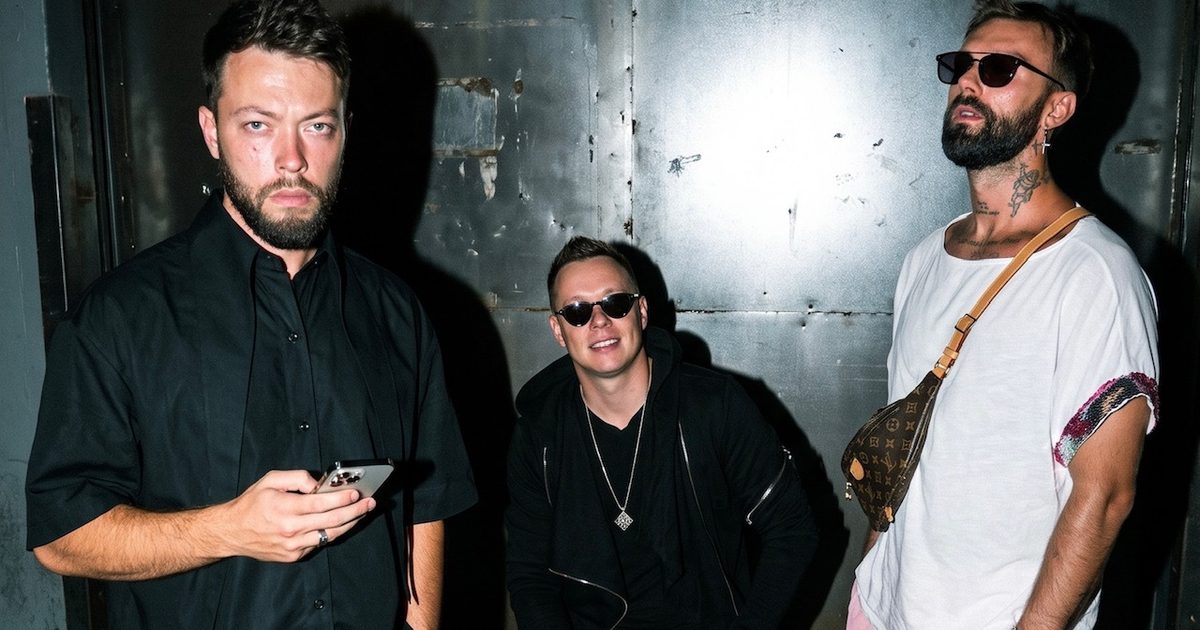
Jardani Crow Band
Sounds like: A jolt of Asheville bar band electricity coursing through a New Orleans groove that creates a feel reminiscent of The Wallflowers and Counting Crows.
Interview:
Describe your approach to music and how you would explain your sound to others.
MIKE– Besides wearing the Indie Folk/Americana/Roots Rock Vibe on my sleeve along with a good dose of post punk grit and raw story telling influences, I think that major thing is my non-traditional singing voice paired with these extremely beautiful and different female background vocals.
“I feel that one of the main strings/threads to all of these songs is the incredible background singers! One of the things that made these recordings so special is that each vocalist brought their own unique style, approach, and personality to the music, adding something truly distinctive to every track. Rather than simply having them sing solely predetermined parts, I encouraged each singer to contribute their own ideas and creative interpretation. A great example is the modulation section towards the end of Heart Attack song. The last thing we recorded was the pedal steel on this song, and the Pedal steel player is Bryan Daste, our co-producer, and he used Clare’s background as the sounding board for his playing! I told Clare that the breakdown section was completely hers to shape as she saw fit, almost like a solo feature. She responded by creating an incredible three-part harmony that added so much depth and emotion to the song. and like i said..helped shape the pedal steel playing. I took a similar collaborative approach throughout the project, allowing each musician the freedom to bring their own voice and artistry to the recordings.
The vocalists are featured as follows:
• Clare Dove (UK) – Fairytale of New Orleans, Rappaccini’s Daughter, Heart Attack, Love Section, Come What May
• Dorothy Takev (Bulgaria) – Midnight Moon, Train, Pathway to Hell
• Ally Rozario (Malaysia, via Belarus) – Her Song, Sand & Broken Shells
• Amanda Williamson (New Orleans) – Midnight Moon, Sand & Broken Shells & Love Section
Each of these artists contributed something unique, and their individual talents helped shape the character and feel of the songs in remarkable ways.”
Rip – Our main difference is we start off with an idea and with each artist we encourage them to express with free range adding their personal flavor to the song and we contribute ideas to fit more into what we hear, and the result is a magical transition into the final mix.
How did you come up with the name of your act?
Mike : Having reconnected with my oldest friend Rip on Bass, we have played in 3 other bands together and have done 4 other full length original albums. We were looking for a name together and over the course of texting back and forth ideas. Rip was telling me of his emotional and spiritual connection with his friends and family in Section, Jamaica and how we walked the trails of the John Crow Mountains. We wanted to honor that feel and use that as our cornerstone/sounding stone for our band. So we came up with “The Jardani Crow Band” –note Jardani means:
Jardani (Slavic) – ‘to be strong’; Jardani (Albanian) – ‘of the earth’ . But it’s an alternative to John…Rip has this great picture of him and his wife in front of the sign….That’s the inspiration.
Rip – We have a home in Section Portland Jamaica and that region is called The John Crow Mountains, so we found the word Jardani which is associated with John the Baptist and the apostle John, we knew Jardani Crow Band was a perfect fit for this project.
What are some artists and albums that have informed your creative direction?
Mike– Wilco meets Big Star meets Tom Petty meets The Replacements is a good start. The albums that I love are: all 3 Big Star Albums, Wilco: a.m and Yankee Hotel Foxtrot(we heavily used Impossible Germany for the vibe for Heart Attack…I doubled my acoustic and I doubled my electric guitar part and paired with Bryan Daste’s(our co-producer and engineer) amazing Pedal steel work I think we captured that type of vibe and sound. The Tom Petty album that I always come back to are: Damn the Torpedos, Long After Dark, and Hard Promises. and for the Replacements: “Tim”, “Let it Be”, and I still have a very used cassette tape of Hootenanny somewhere!
Rip – My early days of absorbing new bands was captured by The Clash, Chicago, Sex Pistols, Bob Marley, Wilco, Grateful Dead and early R.E.M. and more but these were my top influencers.
What’s the most exciting thing happening in music right now?
Mike – Well for us it’s being able to connect with these amazing musicians worldwide and to bypass the machine of major record labels to have 100% control of our vision and what we are doing. Obviously, there is a lot wrong out there, with the loss of kids joining bands and more focused on songwriters and people who are blessed by their family connections and don’t pay dues or even understand what dues are. Right? Technology like the use of SessionWire and Mixup(not paid sponsor) allows us to work remotely with our Producer in Portland, Rip in New Orleans and Me in Asheville, NC to all be on the same DAW and have these killer remote sessions. The same with these amazing sessions we have with musicians all over the world: France, UK, Croatia, Brazil, Japan,Malaysia, Canada, South Korea, and USA.
Rip – I agree with Mike, the advancements of technology and software gives us the ability to work with musicians from around the globe while working in real time.
Where do you see the music world heading in the next five years?
Mike – I hope the young musicians find their unique voices and learn to love creating music with their peers. That collective bonding is what grows your soul and adds beauty to your journey. Billy Strings, Jessie Welles, Amyl and the Sniffers, Wetleg and Wolf Alice are all killing it. IMHO.
Rip – That’s a loaded question because for me I see the music world in 5 years leaning more to AI and less work from the artist to achieve songs that normally would take musicians weeks and months to create. We’er working to preserve the art of writing songs with human heart and mind.
Mike: I hope we are showing how making music is done right and also how rewarding it can be.
How is music helping you during these uncertain times?
Mike – Music saves me from too much thinking and too much drinking. But seriously, Whenever I am down or feeling out of sorts I always force myself to write something new and I push myself. It always makes me feel better in the creation of a new song or riff that NEVER would have existed if I wasn’t in that state of mind. On a side note, during the COVID shut down, to 100% sound hyperbolic, Phoebe Bridges and her music saved me…. She was there with me during the shutdown-..she was putting out her content of playing songs live in her room and the honesty, her incredible voice, and songwriting skills inspired me when i needed it most. I have been told my approach to songwriting and style and the way I do passing notes in chords, use weird tunings, lyrics approach is similar to her. I was honored in that comparison. To show the influence for the track “Pathway to hell” during the last verse: we took the mix and sent it through a bus and left out my lead vocals and drums only….to create my voice on top of this sonic low fi vibe that Phoebe does in many of her songs.I love the way it came out.
Rip – Creating music has always been a relief from the chaotic world we live in from day to day. My brain is constantly creating riffs, hooks, melodies, lyrics, rhythms and ideas for new songs. I’ve been operating this way all of my life so now it’s a part of my daily life without the pressure for new material. Music definitely helps keep me grounded. And through our music we are able to meet people like yourself with positive vibrations.
Until They Burn Me
Sounds like: An arresting combination of Goth rock and Americana that comes across like a supergroup featuring members of Faith No More and 16 Horsepower.
Interview:
Describe your approach to music and how you would
explain your sound to others.
We approach our music very simply: we write what we want to hear. We are not at all concerned with the “correct” way to write a song. Which is a good thing, because neither of us have ever received any musical training, so we wouldn’t know how to do it anyway. We’ve never been concerned with choosing a style either. We just seemed to end up being a kind of rock/alt/country/Americana/punk/folk outfit with a splash of southern gothic, a sprig of voodoo and a dark temperament.
How did you come up with the name of your act?
The name came from lyrics written by Travis Martin 35 years ago when we were in our former band, The Dry Season. It’s a song called ‘Walking My Realms’, and the line was, “so in my walk I turn to shadow, I’ll ride the wind, Until They Burn Me“. It was kind of a way to honor and remember where we came from. While we wanted to do some new things and take our music in different directions than we had thus far done, I think it was important to stay connected to that lineage.
What are some artists and albums that have informed your
creative direction?
The first Mr. Bungle album was life-changing for all of us. The intentional chaos, musicianship, and energy was unlike anything we’d ever heard before. Or since, really. It was a gorgeous and terrible nightmare! Additionally, I would say Tom Waits, Bauhaus, The Stooges and Pink Floyd would probably be our biggest influences.
What’s the most exciting thing happening in music right
Now?
The rapidly uprising resistance to AI slop is probably the most exciting thing happening right now. And certainly the most important thing happening right now. We wear our flaws, rough edges, and imperfections like a badge of honor. For us, music is all about the feel. The raw grit and texture of underproduced music has always been a very effective sound for us. That’s the good stuff. It’s what allows people to empathize with each other. To communicate and share all of the experiences of life. And that just can’t be replicated artificially. Viva humanity! Viva Heathens!
Where do you see the music world heading in the next five years?
Things change so fast that it is very difficult to try to predict even five years in the future. But we would love to see the decline of corporate AI “music” and the exploitation of artists by streaming platforms. We would love to see music return to the days when it was exciting. Grass roots. Made with passion and originality. Physical media. We would love to see the return of vinyl and cassettes and CDs. The whole experience of music the way it used to be. Back in the good old days. Most young people these days have never experienced music this way and it’s a real shame.
How is music helping you during these uncertain times?
Are these uncertain times? I’m not so sure… Well, anyway, music is giving two old men something constructive to do instead of chasing them punk kids off our lawns and bitching about the price of gas. (Over $5 a gallon in Washington! Can you believe that?)
Kutie
Sounds like: Alt-metal alchemy from Clovis, California, that splits the difference between Paramore and Bloodlet.
Interview:

LANDROID
Sounds like: Star Wars-inspired (check the THX-1138 synthline!), endlessly romantic spin on fuzzed-out dreampop crafted in the California desert.
Interview:
Describe your approach to music and how you would explain your sound to others.
We usually describe our music as cinematic synthpop. There’s definitely some shoegaze and dreampop in there, some electronic music, and a little bit of a noir quality too.
We think a lot about atmosphere and how a song makes you feel. We love creating music that feels beautiful but also a little strange or unsettling, like there’s something happening beneath the surface that you can’t quite put your finger on.
Someone once described our music as the soundtrack to driving through the desert at night, and I thought that was pretty accurate.
How did you come up with the name of your act?
I’d been looking for a good band name my entire life. It’s surprisingly hard to find one that doesn’t suck.
When Greg and I moved out to the desert from Los Angeles, we ended up in Landers, California. One day we were at Pappy & Harriet’s, the big music venue out here, and I was talking to Linda Krantz, who was one of the owners at the time. I told her we lived in Landers and she said, “Oh, you live in Landers? You’re Landroids.”
And I immediately thought, “Oh my God. That’s the band name I’ve been looking for my whole life.”
I turned to Greg and said, “That’s our band name. We’re LANDROID.”
And that was it. We’ve been LANDROID ever since.
We pull inspiration from all over the place. David Lynch and the world of Twin Peaks have probably influenced us as much as any musician has. We love that combination of beauty, mystery, darkness, humor, and things that feel surreal.
What are some artists and albums that have informed your creative direction?
Musically for me, Beach House and the Cocteau Twins are big influences. Bloom and Heaven or Las Vegas are both perfect records, in my opinion. Greg loves Pink Floyd, Stevie Wonder, and John Coltrane (Elvin Jones is his drumming hero). Dark Side of the Moon? I mean, come on. It’s another perfect album. It might be the ultimate perfect album. And A Love Supreme. Does it get better than that? And then Nigel brings his love for artists like Radiohead, Bright Eyes, and Bon Iver and voilà! You have LANDROID. It’s a mish mash, for sure. We’re dreamy, but we’re also rock’n’roll.
What’s the most exciting thing happening in music right now?
I think one of the most exciting things happening in music right now is that, even with the rise of AI, there seems to be this opposite reaction where people are really valuing things that feel tangible and human. We’ve seen that firsthand. We sell a surprising number of CDs (who knew people even had CD players anymore?!), vinyl records, cassette tapes, and other physical things.
It feels like people are placing more value on actually being in a room together and experiencing music in real time through live performances, too. I love that. The more technology becomes part of our lives, the more people seem to crave connection and things they can hold with their hands. That’s exciting.
Where do you see the music world heading in the next five years?
I think AI is obviously going to change music in ways that none of us completely understand yet. I wish AI would clean my house or do my laundry and not try to write songs or create art, but it’s happening, and I don’t know that it can be stopped.
There’s going to be an enormous amount of music being created, and I think it’s going to become more difficult to know what’s real, who made something, and maybe even what “making music” means.
But I also think that’s going to make the human part of music more significant. People are going to want to know the story behind the songs and feel connected to the people making the music. Live shows, physical releases, and communities built around artists are going to become increasingly important. That’s where I hope it goes, anyway.
How is music helping you during these uncertain times?
Music is really how Greg, Nigel, and I process life. Sometimes we don’t even know how we feel about something until we’ve written a song about it. There’s something about taking whatever you’re carrying around, consciously or unconsciously, and turning it into music that can be incredibly healing.
And music does something to us physically and mentally, too. Whether you’re bouncing around at a show, standing there listening and feeling the frequencies, or just being in a room full of people experiencing the same thing together, something shifts in you and it’s usually for the better. That feels vital right now. We spend so much of our lives separated from each other behind screens. Music brings us back into our bodies and back into community. There’s an ancient need to gather together around music and have a collective transcendent experience. It’s our church, for sure.
Sonic Anonymous
Sounds like: “Weird, existential, late-night synthpop for the burnt-out generation” that sounds like a homespun take on Tame Impala.
Interview:
Describe your approach to music and how you would explain your sound to others.
When I was 8, I found an Elvis record in the basement and knew I wanted to perform music. A year later I heard Bob Dylan and realized I needed to write it too. I think there’s a real relationship between a song, the writer, and the instrument. I tend to play used gear because every instrument already has a story, and I invite it to sit down and have a chat. From there it usually lets me share mine, and the whole thing becomes this stream-of-consciousness way of processing whatever we’re carrying. Music is one of the few places I don’t have to perform a version of myself for anyone else… but, if I’m being honest, I do hope other people connect with it, too.
How did you come up with the name of your act?
It comes from a pretty personal place. I spent a lot of years masking, basically trying to be whatever version of myself I thought I was supposed to be. “Sonic” is about having something to say. “Anonymous” is about the fact that it could be me, you, or anyone carrying similar emotions. Framing it that way lets me make the project less about me specifically and think about the shared emotions a lot of people carry. The deadpan guy in the bathrobe with the flashing “JOLLY” tiara is the visual for a forced smile, the mask, while feeling drained behind closed doors. It’s ultimately about acknowledging the hard stuff, growing through it and still showing up.
What are some artists and albums that have informed your creative direction?
My influences are all over the place. I keep coming back to Neil Young’s “ditch era,” Bowie, Zappa, Phish, Can and Talking Heads — those completely changed how I think about music.
Funny enough, most of my demos start out sounding like outtakes from The Kinks’ Low Budget, I also have a real appreciation for French pop — both Gainsbourgs, Juniore, and pretty much anything bossa nova. I have to mention Keren Ann. In 2010, I wrote her a letter telling her how much her albums meant to me and she actually wrote back. It was specific and kind. She even listened to one of my songs and said it wasn’t really her thing, but she loved the piano… that sticks with me to this day.
Recent heavy rotation includes Anna Erhard, Dry Cleaning, Aldous Harding, Cate Le Bon’s Pompeii, St. Vincent’s Daddy’s Home, Deradoorian’s Ready for Heaven (that bass and percussion synchronization is incredible), Automatic, Reggi Roomers, Godley & Creme, and 10cc.
What’s the most exciting thing happening in music right now?
The amount of access we have now. Anyone can write, record, and put something out at a high level without waiting for permission. You can test ideas, work with great session players remotely, and just keep refining until it feels right. That freedom still blows my mind.
At the same time, people seem to be getting tired of only writing in their rooms and wanting to get back out. Musical collaboration is electrifying when you can bring different perspectives and levels of talent together in one room. And if you’re worried there’s no place to play, go support your local open mics – it fosters the musical ecosystem.
Where do you see the music world heading in the next five years?
AI is the obvious one. Everyone’s talking about it, and I think it’s going to create a split in how people listen. Some will lean into AI-generated music the same way people got into HDR photography or anime… one doesn’t replace the other, it just opens another lane with its own fans if it’s properly disclosed as AI content.
The models are getting better, but it’s also more predictable, and people are getting better at spotting it. I think that will push a group of listeners toward human-made music and an interest in album releases instead of just 30 seconds of social media hooks. We’ll probably see more AI-fronted acts, AI labels, even holographic pop stars that tour like an EDM show. There needs to be real regulation. Tech companies are already paying voice actors to train AI models, and that same approach should be applied to music. Instead of scraping an independent artist’s catalog for free, gain the artist’s consent and pay royalties rather than just taking the data.
At the end of the day, listeners, fans, and artists have to take action and support music in ways that signal to the industry that money can still be made through touring and album-based releases. So go to shows, listen to full records, buy physical merch, read tastemaker blogs. Otherwise, people are just complaining while consuming what’s on the menu and quietly normalizing the things they claim to oppose.
How is music helping you during these uncertain times?
Music is one of the few things that still cuts through the noise. It’s a universal language. You can put musicians from completely different backgrounds in a room, people who don’t even speak the same language, and someone starts on a note, and everyone just knows what to do. Suddenly there’s a shared moment that didn’t need words. That’s beautiful and it builds community through something as simple as sound and feeling.
Chris Giuliano
Sounds like: Uplifting, classic house that definitely has all the hallmarks of summertime on the dancefloor with its progressive fervor and crisp piano undercurrent.
Interview:
Describe your approach to music and how you would explain your sound to others.
I’ve revised, crafted, and evolved my sonic style over the years, and I think it’s still evolving. I don’t write with genre in mind. I write with feeling, emotion, and reaction in mind. If something makes me feel something, that’s usually the direction I want to follow. The genre, or lack of specific genre, tends to come after the music.
How did you come up with the name of your act?
Simple. It’s just my name. No frills!
What are some artists and albums that have informed your creative direction?
Above & Beyond’s Tristate album was an important record for me. I also became heavily influenced by the sound design coming out of drum & bass and dubstep in the late 2000s. I’m always keen on and working towards unique sound design, and that’s become a pretty big part of how I approach production.
What’s the most exciting thing happening in music right now?
The acceptance of artists moving between multiple genres is really refreshing to me. I think there’s less pressure to fit neatly into one box, and that’s allowing artists to follow whatever feels natural to them. I’ve never really been interested in limiting myself to one sound, so I like seeing that become more accepted.
Where do you see the music world heading in the next five years?
I think we’re going to see more and more of a callback to the classic sounds of electronic music. The cycle has already begun. It’s nice to see where older sounds and production techniques are being rediscovered and brought into a modern context. I don’t think that’s going away anytime soon.
How is music helping you during these uncertain times?
Music has always been a complement to life for me, and it’s also a mindful-release during difficult times. It’s one of the few things that can soothe your emotional state. Music is such a strong part of human existence, and creating it is as much about processing life as it is about making something people can listen to.
Gordon Shirley III
Sounds like: Quiet, intricate folk from somewhere in Georgia imbued by slide guitar reminiscent of Chris Whitley.
Interview:
Describe your approach to music and how you would explain your sound to others.
My approach to music is very simple and very solitary. All songs feel different when they start to surface. Some come hard and fast, like you’re riding a wave and holding on for dear life, trying not to lose your grip. Others are like a long‑distance call — a feeling that the universe is ringing and you don’t know how to answer. It rings so quietly you’re not even sure you hear it, and you strain to listen past the noise. If you’re lucky enough and quiet enough, sometimes the call comes through.
I’m not a product or a project. I’m just a real, imperfect guy with a box of broken crayons trying to paint the best picture I can. My sound leans toward quiet, character‑driven folk with a little Southern melancholy. I grew up around a lot of talented musicians in Georgia, and that storytelling tradition stayed with me. The songs are simple, usually just guitar and voice, and I try to let the lyrics carry the weight.
Even when I use modern tools to help create a nice recording, the heart of what I do is still very human — one person, one guitar, and whatever feeling I’m trying to conjure in that moment.
How did you come up with the name of your act?
The name of my act is just my name. I use Gordon Shirley III because I grew up in a house with three Gordons — my grandfather, my father, and me. My grandfather was simply called Pa, my dad went by Junior, and I was given a very typical Southern nickname: Doodle.
So when it came time to share music, I figured Gordon Shirley III sounded a whole lot better than Doodle. It also felt honest. It’s who I am, and it carries the history of the family I grew up in — three generations of Gordons, all different and all the same.
What are some artists and albums that have informed your creative direction?
I’ve always been drawn to artists who write with honesty and a little bit of vulnerability — people who sound like they’re telling you the truth, even when the story gets messy. Loudon Wainwright III was one of the first songwriters who made me realize you could be funny, sad, and painfully honest all in the same breath. Blaze Foley showed me how fragile a song can be and still hit like a hammer.
And even though I may not sound like Cat Stevens, Nick Drake, or Jim Croce, little pieces of them show up in unexpected places — a turn of phrase, a quiet moment, a certain way a guitar line leans. They were part of the soundtrack of my life, and some of that inevitably finds its way into the songs.
I grew up listening to all kinds of music, but those artists and albums gave me permission to write the way I naturally do: simple, human, a little worn around the edges, and focused on the story more than the shine. I’m not technical at all — I mostly feel my way around, and try to trust where I’m going.
What’s the most exciting thing happening in music right now?
I think one of the most exciting things happening in music right now is watching artists like Stephen Wilson Jr. break through. He’s doing something raw and emotional that feels both familiar and brand new, and it reminds me that there are still people out there writing from the gut.
But honestly, the biggest change — and the most beautiful one — is what’s happening because of TikTok. For the first time, so many wonderful, talented musicians who used to only play for their family on the couch, or hide away in their basement making songs that would never see the light of day, are getting some well‑deserved attention.
I’ve always believed that musical gifts are far more common than people think. There are thousands of folks out there with voices, stories, and melodies that could stop you in your tracks — they just never had a way to be heard. Now they do, and watching those quiet, hidden artists suddenly find an audience feels like one of the most hopeful things in music.
Where do you see the music world heading in the next five years?
I think the music world is heading toward something more open and a lot less gatekept. Music can be whatever it needs to be for you. I think there will always be plenty of opinions about it, but not many rules.
Electronic tools and software have been part of music for decades — long before AI showed up — and they’ve shaped everything from home recording to the way people write. AI is more complicated, of course. I’d like to think of it as just another tool, but I know it isn’t that simple. It’s here, and it’s not going away. Is it evil or a blessing? Like everything else, it’s probably both.
What matters to me is that the heart of music still comes from people. Whether someone is writing on a guitar, producing on a laptop, or using new technology to help shape a sound, the feeling behind it is what makes it real. I think the next five years will be a mix of old and new — more voices, more ways to create, and fewer barriers keeping people from sharing what they make.
How is music helping you during these uncertain times?
Music helps me every day, whether I am struggling to make a song or listening to it cranked up in my car. Music lets me time‑travel to the special moments in my life. As I get older, it’s become great therapy for me.
For so many years, I let my songs pile up only to share them with a few friends. This year I’ve decided to share them with the world. I open myself up to all kinds of opinions — it’s taken a little courage. Of course, there are nice people too, and that makes it worth all the trouble.
GODHOUSESTARS
Sounds like: Prime American trapwave that sets itself apart with dark, goth-like synths peppered by imaginative lyricism and a soulfulness that recalls Nourished by Time.
Interview:
Describe your approach to music and how you would explain your sound to others.
Regarding the approach to my music and describing my sound, I look at it as Trapwave, which blends the European synth styles I experienced while living in Baumholder, Germany, with the classic Atlanta trap sound from my time working there.
How did you come up with the name of your act?
GODHOUSESTARS represents essential elements of life and guidance: God represents food, House represents shelter, and Stars serve as a compass.
What are some artists and albums that have informed your creative direction?
My creative direction has been heavily informed by a diverse range of artists and albums, including Tha Carter III by Lil Wayne, Blonde by Frank Ocean, Wide Open Spaces by The Chicks, All Eyez On Me by 2Pac and Michael Jackson’s Thriller.
What’s the most exciting thing happening in music right now?
Looking at the landscape today, I think the most exciting thing happening in music right now is PinkPantheress.
Where do you see the music world heading in the next five years?
Over the next five years, I see the music world shifting away from traditional computer recording and moving solely toward mobile DAW recording. In fact, most of my own work is recorded entirely on mobile DAWs.
How is music helping you during these uncertain times?
Finally, during these uncertain times, music helps me stay close to God, my family, and my home, while providing a grounding foundation as I travel for work, advocacy, and philanthropy.
Purse Thief
Sounds like: Poetry-laced indie rock from New Mexico that pays homage to Jonathan Richman and the Modern Lovers with a sound that will certainly appeal to fans of Viagra Boys.
Interview:
Describe your approach to music and how you would explain your sound to others.
The approach is, try to make the thing you wanna hear in the world not make the thing you’ve heard. Be a good listener, a good performer, take what you’ve learned and try and make it yours, make it fun. The resistance can be a good time. We sound like old rocknroll got in a car chase with some punk rockers from New Mexico.
How did you come up with the name of your act?
Purse Thief was a way of taking a descriptor/stereotype applied to criminals and minorities and turning it on its head. Saying “the purse” is actually what’s been stolen from the people. Trying to incorporate this ethos of those who have given back to the poor. Taking a name that would possibly sound juvenile and adding an element of art and poetry to it, making people look twice.
What are some artists and albums that have informed your creative direction?
I think we are all a bit all over the map: The Velvet Underground (Banana Album) At the Drive-In (Relationship of Command) The Dead Boys, Patti Smith, Dylan, John Prine, Lee Moses, The Sex Pistols, The Refused, early 90’s hip-hop. Anyone who could fit a message inside some good poetry and still have it feel straight-foward.
What’s the most exciting thing happening in music right now?
I think the resurgence of a DIY scene, underground venues popping up again. Seeing what the knee’-jerk reaction is musically to this chaotic state of corruption and decline. I love the Australian Punk Scene and some of the stuff coming out of the small towns again. Feeling like people are crying out for good music again, that desperation being answered.
Where do you see the music world heading in the next five years?
In this moment, we are seeing humans beg other humans to support human made art and human made music, the logical place of where that leads is another chasm, another culture war, more fragmentation, it takes about 25 minutes of uninterupted time to regain your concentration from distractions. we might be dealing with humans who will never know what that’s like, to have that. I think more than ever putting on a record will be a form of meditation, real raw live music will have this feeling of something dangerous again. I don’t know where it heads but I know we need good artists more than ever.
How is music helping you during these uncertain times?
It’s giving me something to write about that’s for sure, music makes fast friends of us, watching a song travel the world is one of those journeys that feels like a deep adventure. When you find something you wanna put on repeat, that’s love. 
The Difference Machine
Sounds like: The next wave of Atlanta hip-hop that brings the psychedelic swirl to the city’s rap game with a golden assist from Ishmael Butler of Shabaaz Palaces/Digable Planets.
Interview:
Describe your approach to music and how you would explain your sound to others.
Our approach is based on feeling. Music is to be felt first and foremost. The technical stuff is all based around that. We sculpt our decisions in service to the feeling. Something that took us a considerable amount of time to figure out. Sometimes feelings are difficult to sort through. We have to connect spirit with our humanity. I honestly wouldn’t explain our sound to others. That’s for them to figure out…what it means to them. We just present what we have. Art is subjective, and however they interpret is cool with us.
How did you come up with the name of your act?
That’s a funny one lol. A lot of bad names were thought of before we arrived at TDM. I can’t remember the exact origin. I know it was a combo of conspiracy and Brannon Boyle’s brainchild (our ‘manager’ and booking agent)
What are some artists and albums that have informed your creative direction?
Our influences run the gamut. From 13th Floor Elevators to Outkast to Zappa to Dilla to edan to Company Flow to Brian Jonestown to Marvin Gaye and George Clinton to Sun Ra. We are the children of them all. And so so, so many more.
What’s the most exciting thing happening in music right now?
I couldn’t pinpoint it to one specific thing. I think we’re most inspired by the people around us. The ones who don’t have millions of views or streams but are just as, if not more, talented. The folks who still create regardless of that fact. Our local community is insanely good. Thank god we get to fellowship with them.
Where do you see the music world heading in the next five years?
Hmmm… I’m not sure. And I’m not sure it matters. We keep the pedal to the floor regardless of what’s going on around us. In all times, Creators must create.
How is music helping you during these uncertain times?
In our eyes, times are always uncertain. As soon as anyone thinks things are all good, boom, something crazy happens. Even when the world at large seems static, individuals’ lives are thrown into disarray at the drop of a hat. Lose a job, wife dies, parents die, car breaks down, bombs drop. You never know. The only constant is change. The best cope is music. That’s what its made for, to shepherd us through whatever times come. Both happy and sad times. Music will be there. 
No Face Lonewolf and The Illumin8tives
Sounds like: Street-level activist hip-hop from the cradle of the Civil Rights Movement — Selma, Alabama — boasting a feel that will appeal to Yaasin Bey and UGK fans alike.
Interview:
Describe your approach to music and how you would explain your sound to others.
My approach to music is probably best described as cinematic Southern hip-hop with futuristic, intellectual, spiritual and rebellious DNA. I don’t really approach a record as just a song. I’m building a world, a character, an argument and sometimes even a mythology.
With No Face Lonewolf, the music is more individualistic. It’s aggressive, introspective, philosophical, sometimes dark, sometimes humorous and sometimes intentionally larger than life. There’s street language and trap energy, but underneath that there are questions about identity, mortality, God, power, loyalty, history and what it means to be a man. Songs like Slaughda Mane, Lone Ranger, China Shop, and AnyFace gods come from different angles, but they’re all pieces of that same character.
The Illumin8tives expands that philosophy from the individual to the collective. It stands for spiritual royalty which encompasses members of every color, creed, gender, and class. The idea is enlightened minds making elevated music and creating elevated art. It’s hip-hop, but the ambition is bigger than fitting neatly inside a subgenre. There’s Southern rap in it, trap in it, soul in it, philosophy, spirituality, social commentary and cinematic storytelling. Ultimately, it is a movement inviting similarly minded souls to join in.
I’m from Selma, Alabama, so history isn’t theoretical to me. You grow up around a place like the Edmund Pettus Bridge and Brown Chapel Church and you’re constantly reminded that ordinary people can confront enormous systems. That naturally finds its way into the art. I also work in law and academia, so I’m constantly thinking about language, evidence, contradictions, institutions and how power actually operates.
Put all of that together and I would call the sound Southern futurist hip-hop or Astral Trap: Southern in its foundation, futuristic in its imagination, philosophical in its subject matter and cinematic in its presentation. No Face Lonewolf’s sound is best described as elevated Dirty Ditch (Alabama) Music.
How did you come up with the name of your act?
No Face Lonewolf is really a philosophy of identity.
“No Face” represents refusing to be imprisoned by a single identity. My identity is unboxed: professor, lawyer, rapper, businessman, intellectual, philosopher, teacher, street, Southern, artist. I never believed those identities had to cancel each other out. I’m fine with the contradictions and warring roles. I grew up around lawyers and doctors as well as activists and revolutionaries as well as the streets. I am not a particular one of these identities. I am all of them and none of them. I can create, destroy and recreate identities. Adaptability and emotional power and complexity are my core superpowers.
“Lonewolf” represents independence and self-reliance. A wolf can belong to a pack, but the lone wolf has to trust his own instincts. That’s important to me creatively. I’m willing to move in a direction before other people understand why I’m going there.
So No Face Lonewolf contains an intentional contradiction: no fixed identity, but a very definite identity.
The Illumin8tives represents the other side of that idea—the power of the collective. “Illuminate” is about bringing light, knowledge and consciousness. “Native” suggests something inherent rather than acquired, hence, intrinsic spiritual royalty. The “8” also carries the visual idea of infinity when turned sideways. So the name represents enlightened creative people coming together to make something whose impact can extend beyond the individual.
That’s why No Face Lonewolf and the Illumin8tives aren’t contradictory to me. One represents sovereignty of the individual; the other represents power through collective consciousness.
What are some artists and albums that have informed your creative direction?
My influences aren’t limited to artists who sound like me. I’m more interested in artists who created their own universes and have distinct voices and emotional power: Sly and the Family Stone, George Clinton, Macy Gray, Alanis Morissette, Lorde, Prince, Al Green, etc. I’m also influenced by artists like Pimp C, Tupac, Andre 3000, Goodie Mob, Scarface, whose music carries testimony, spirituality, resistance and social analysis simultaneously.
And creatively, I pay attention to ambitious albums such as Kanye West’s My Beautiful Dark Twisted Fantasy. Not because I want to reproduce its sound, but because I respect the idea of treating a hip-hop album like a large-scale artistic production—a collage where production, imagery, collaborators and mythology all contribute to the final world.
So I don’t think in terms of “Who do I want to sound like?” I think in terms of “Who gave themselves permission to create without boundaries?”
Those are my influences.
What’s the most exciting thing happening in music right now?
Access.
For the first time, an independent artist can realistically operate like a miniature entertainment company.
I can make the record, develop the visual identity, create cinematic content, design merchandise and fashion around it, distribute the music globally and communicate directly with listeners. Technology has dramatically reduced the distance between an idea and its execution.
The numbers show how significant that shift has become. In 2025, independent artists and labels accounted for roughly half of the royalties generated on Spotify, and more than a third of artists generating at least $10,000 there were DIY artists or began their careers that way.
AI is another part of that transformation. I’m interested in AI as an amplifier of human imagination, not a substitute for imagination. Luminate reported in its 2026 midyear research that musicians are already using AI disproportionately for editing and remixing, while fully AI-generated tracks still haven’t demonstrated the same lasting impact on actual music consumption.
That’s an important distinction.
The exciting question isn’t, “Can AI become an artist?”
The question is, “What can an artist become when technology removes some of the historical limits on his imagination?”
That’s much more interesting to me.
Where do you see the music world heading in the next five years?
I think we’re moving from the recording artist to the world-building artist.
Music will remain the nucleus, but successful artists will increasingly create interconnected ecosystems around it: music, short films, AI-assisted visuals, fashion, live experiences, communities, characters, intellectual property and direct relationships with fans.
I also think we’re going to see a reaction against the overwhelming amount of content technology makes possible. When everybody can create something, identity becomes more valuable than content.
That’s already becoming visible. Platforms are dealing with enormous quantities of music while simultaneously investing in artist verification and identity protection because AI-generated filler and impersonation can undermine trust.
So ironically, I think AI will make authenticity more valuable, not less.
We’re also going to move from chasing millions of passive listeners toward identifying thousands of highly committed supporters. Luminate’s 2026 research estimates that about 20 percent of U.S. music listeners qualify as superfans based on the breadth of their engagement with artists.
That changes the economics. An independent artist doesn’t necessarily need everybody. He needs his people.
And geography is becoming less important. In 2025, artists were routinely generating more than half of their Spotify royalties outside their home countries within two years of debuting.
That means somebody can make something deeply rooted in Selma, Alabama, and potentially build an audience in London, Lagos, Tokyo or São Paulo without removing the Selma from it.
That’s powerful.
How is music helping you during these uncertain times?
Music gives me a place where all the different parts of me are allowed to exist simultaneously.
There are things you can express through music that don’t fit comfortably inside a classroom, a courtroom, a business meeting or an ordinary conversation.
Anger can become rhythm.
Contradiction can become a verse.
History can become imagery.
Fear can become a character.
Faith can become a hook.
Music allows me to take experiences that might otherwise remain internal and turn them into something tangible. That’s especially important during uncertain periods because uncertainty creates pressure—and creativity gives that pressure somewhere productive to go.
That’s part of what No Face Lonewolf represents to me. The wolf isn’t somebody who never experiences uncertainty. He’s somebody who keeps moving through it.
And the Illumin8tives represents the next step: realizing that individual survival isn’t enough. You find other creative people, exchange ideas, build something together and try to illuminate something for the people listening.
Ultimately, music reminds me that creation itself is an act of agency.
I may not control the political climate. I may not control the culture. I may not control the economy, the algorithms or what happens tomorrow.
But I can still make something today.
And sometimes making something is how you refuse to let uncertain times define you.
The Mar Mars
Sounds like: If Colin Blunstone and Rod Argent made music from a California perspective rather than an English perspective, it would sound something like this.
Interview:
Describe your approach to music and how you would explain your sound to others.
We started as a college band in the late 1970s, playing mostly cover songs for school dances and parties. The musical variety was pretty wide, but Power Pop and New Wave featured prominently. We were fortunate to have two great songwriters in our band, the late David Foley and Peter Marston. Back in the day, we played (and even recorded) some of Dave’s tunes, while Peter wrote songs for his other band, The Phlaix (with current Mar Mar’s guitarist, George Sanger). Since Dave’s passing in 2023, Peter writes most of the music, while various band-members contribute lyrics. The strongest influences remain Power Pop and New Wave.
How did you come up with the name of your act?
Peter Marston suffered from stuttering when he was a kid and gained the nickname “Mar Mar Marston.” He lent his nickname to the band.
What are some artists and albums that have informed your creative direction?
Individual members of the band came from widely varying musical backgrounds, but we coalesced around a shared love of classic rock, Power Pop, and the New Wave music that was breaking through when we were in college. Our specific influences were all over the song lists we used to play as a dance/party band at the end of the ’70s. It all started with The Beatles, The Kinks, The Stones, and the Who. We were also immersed in the New Wave scene that was blossoming while we were in college in the second half of the ’70s. We adored Nick Lowe, Elvis Costello, The Knack, Cheap Trick, and Tom Petty. We used to end every show with Eddie & The Hot Rod’s classic, “Do Anything You Wanna Do.”
What’s the most exciting thing happening in music right now?
Perhaps the most exciting development in recent music is its democratization. It is so much easier to find new, really good bands that have something to say. Nearly all of the gate-keepers who dictated musical directions have disappeared. Of course, the sheer volume of music out there can make it hard to find artists who really speak to you as a particular listener. That’s one reason why your monthly list is really valuable.
Where do you see the music world heading in the next five years?
We don’t pay too much attention to where the music world is going. We are a band of old friends, who still enjoy making new music together. And we hope that others might enjoy our music as well.
How is music helping you during these uncertain times?
These are, indeed, uncertain times. But all times are uncertain. It’s often said that the only certainties in life are death and taxes. That’s part of what makes music so important at all times. 
The Train Rockers
Sounds like: Underlying motorik-style rhythmic tightness coupled with the big rock melodies and soaring electric guitar that definitely owes a debt to J. Mascis.
Interview:
Describe your approach to music and how you would explain your sound to others.
Rich (England): Street rock.
Frank (Germany): Since we started as a street band in 2015, the street has definitely had a big influence on the way we approach music. For a long time, we literally played every Friday at the corner of Münchner Freiheit, a bar district in Munich. Then we moved on to subway trains, and later to other German cities like Berlin and Hamburg, and even to Paris, Prague and Dublin. From time to time, we were also invited to play in jails, which had a pretty strong influence on our songwriting and our sound as well.
The basic structure of our songs was often written in solitude at home, but a lot of them really came to life on the street, exposed to all kinds of people and situations — from partying, over playing spontaneously with other musicians, to crime scenes and some very touching situations. One time, Holger, a huge metalhead, who often looked down on us, for we were not metal enough in his eyes, came up to us and said: I would have thrown myself in front of the subway, if you hadn’t been playing here…“
I guess all these impressions from streets, cities and jails somehow mixed with our songwriting, made it more real, added more soul, brought real stories into it. More down-to-earth. More human. We had met the ugly side of the city.
We’d say our sound is a cocktail of alternative rock, country elements, Irish folk, punk, pop and an overdose of street reality.
How did you come up with the name of your act?
We were playing one night in a subway train when a woman approached us. She said she was from the local radio station EGO FM, that she liked our music and wanted to do a show with us. Then she asked us our name. We didn’t have one. So a friend of ours said, “Just call yourselves The Train Rockers. That’s what you do.” It’s close to Train Robbers or Train Wreck, but you rock. ? So we went with it. And now we have to explain it all the time…
What are some artists and albums that have informed your creative direction?
Since we’re a three-nation alternative rock band, there are quite a few different influences.
Rich, our English Accordion and piano player, mentions Muse, Keane, Barenaked Ladies and Anamanaguchi.
Sam, who also plays keys and bass, is into Mumford & Sons, Bakkushan, Billy Talent, Lenny Kravitz and Bruno Mars, but also cinematic scores. He plays classical music as well as Richard.
Chrissie, our drummer, mentioned The White Stripes, Rage Against the Machine, Red Hot Chili Peppers and Nirvana, which I also still like a lot.
Sülo, our lead-guitarist, brings some Turkish rock influences into the mix, along with classic rock and Turkish folk elements. He also plays traditional Turkish instruments.
I, Frank, (vocals and guitar), was heavily influenced by the enigmatic, pioneer indie-sound of The Pixies, the melancholy and lyrical finesse of The Cure and the rage, rawness but also the cool melodies of The Clash. Later also by U2, Kings of Leon, The Strokes and a bit of Arctic Monkeys.
But some of my biggest classic influences are the early Bob Dylan albums, The Beatles Sgt. Pepper’s and last but not least Johnny Cash’s legendary At Folsom Prison and At San Quentin, as well as his American Recordings with Rick Rubin. I first heard those unbelievably intense prison albums while sitting in a car in Berlin, where I had a pretty dull job as a driver. It hit me hard. I could hear and feel how Johnny Cash was giving joy, dignity, hope and even faith to these people who were desperate with themselves and the world. And I remember thinking: “That’s what I want to do.” What a character Johnny Cash was. What a REAL human being. No effects, no plastic, no big light show — just him, his cool, his empathy, his band and the inmates.
What’s the most exciting thing happening in music right now?
Rich: Social media, independent radio stations that operate globally, and music platforms are making music more democratic, even for smaller independent artists. In a way, it’s similar to how YouTube and podcasts challenged mainstream TV and radio.
Sam: On the one hand, you can find so much good and original music from all over the world if you dig deep enough. The downside is that music also seems to be becoming a bit inflationary through streaming, but also through how easy it has become to produce music at home — and now with AI on top of that.
Frank: What I find exciting is that, every now and then, a really original-sounding band or artist manages to break through the established patterns of the mainstream, while staying true to their roots — like Mumford & Sons, Twenty Pilots, The Black Keys and Bon Iver.
Where do you see the music world heading in the next five years?
I recently saw a documentary about Nirvana, where Kurt Cobain was asked how he felt about the charts. I won’t quote him here, but let’s just say he wasn’t exactly a fan. I think it will always be that way. Solo pop acts, the “guitar faction,” the hip-hop world and electronic artists aren’t necessarily going to be best friends. Everyone is looking for their own piece of the cake, looking at the #1 spot and chasing success. But chasing success doesn’t automatically lead to better music. My fear is that the critical insiders of the music industry are right when they say that really brilliant artists are increasingly becoming content creators — mainly for the sake of influence, numbers and money. At the same time, I think people are slowly starting to realize what’s going on. You can see it in the growing call for artists to get back to original music — music that isn’t made for social media, clicks or money, or by AI, but to really touch hearts and minds by finding your very own voice and a real story behind it, in the middle of all the noise. Another problem is that it’s getting harder and harder to stay original as a musician and actually make a living from it. And that’s a screw only the industry can turn.
How is music helping you during these uncertain times?
It helps us focus on the things that really matter in life and keep moving through moments that can feel unbearable and tough. But music can also be a kind of therapy. A way to write, shout, scream, unload and reflect your own problems — or the problems of other people — channeling it into the music.
And hopefully, it helps someone else feel a little less alone with whatever they’re going through. Maybe they hear a song and think, “Okay, they know how I feel. I’m not completely nuts.” And, to quote Johnny Cash one more time — who went through some pretty tough things himself and whose Christian faith we also share: “These things shall pass…” and “I’ll fly away, oh glory, I’ll fly away.”
FireBug
Sounds like: A Joshua Tree, California-born combination of Blind Faith-esque soulfulness and psychedelic Zep blues swirl that falls somewhere between early Heart and mid-period PJ Harvey.
Interview:
Describe your approach to music and how you would explain your sound to others.
Jules: In the early days, I’d show up to rehearsal with a song idea and just throw it at the full band to see if it stuck. Sometimes it clicked in a few minutes; other times it bounced off the wall, and that was the end of it. Over time, Juliette and I have gotten tighter as a writing team. We still work on ideas separately, but we also sit down together a lot and shape things until they’re solid enough for the band to grab onto the structure and run with it. That connection makes the process faster and more fun.
We’re also really open to collaboration and expanding our sound. Right now, we’re working with three-time Grammy winner David Bottrill (Tool, Peter Gabriel), which has been exciting and is pushing us in new directions.
The music itself comes from our influences and the stories we’ve lived. We soaked up the scenes in Chicago, New Orleans, and Los Angeles before planting ourselves here in Joshua Tree. All those places left their mark: blues, psychedelic, rock, a little New Orleans soul and grit — and now it all filters through the desert life we’re living. The result is something that feels honest to where we’ve been and where we are right now: two people who know how to write together, still curious and still growing.
Juliette: When sitting down to come up with a groove, some lyrics, a melody, or a song, my approach to creating music is often to keep everything free and open-ended without thinking too much about having any type of process. I like to jam on the guitar or keyboard and sing along with some melodies &/or lyrics that I have in my head. I often go with what I feel. I like to improvise when practicing quite a bit. This often leads to ideas. If something sticks, then I will continue on to work on it from there or put it down and come back to it later. Sometimes an entire song can be the result of an on the spot inspiration. It’s always fun when that happens! Once I feel like I have something worth hanging on to, I will introduce it to Jules so that we can work on it further.
How did you come up with the name of your act?
Jules: The name FireBug comes from a song my band wrote back in college at UCSB. It just stuck. When Juliette and I started working together, it felt like the right fit, so we kept it. We’ve never changed the name over the years; it’s always been FireBug.
Juliette: I have never been good at coming up with band names, so when Jules came up with the name, I was like, OK, it’s short and easy to remember, so let’s go with it. I also thought that the name fit our music in the sense that some of our music can be quite emotive.
What are some artists and albums that have informed your creative direction?
Jules: I listen to a pretty wide spectrum. I’m always drawn to those late-’60s and early-’70s artists who were breaking barriers and mixing styles: Pink Floyd, Led Zeppelin, The Doors, Sly and the Family Stone, Cream, The Jimi Hendrix Experience. That era still feels endless to me.
Then there’s the heavier ’90s side: Soundgarden, Alice in Chains, Queens of the Stone Age. I also love the more experimental stuff like Radiohead and King Gizzard & the Lizard Wizard, plus the L.A. underground feel of Beck and Elliott Smith. And underneath all of it is the Delta blues and New Orleans sound of artists like Dr. John and The Meters — that grit and groove never leave. All those things swirl around and somehow end up in what we do.
Juliette: I have also been inspired by a wide variety of music and artists, everything from early 60s folk, rock, psychedelic rock, blues, and soul to more experimental stuff as well. I pretty much love all of the bands/artists that Jules has already mentioned, along with BRMC (Howl),The Verve (Urban Hymns), Blind Faith (Blind Faith), Leon Russell (Leon Russell), Kula Shaker (Peasants, Pigs & Astronauts), Rainbow (On Stage), David Bowie (David Live), Aretha Franklin (I Never Loved a Man the Way I Love You), Portishead ( Portishead), Beck (Mutations), The Rolling Stones (Exile on Main St.), Howlin’ Wolf (Moanin’ in the Moonlight), Otis Rush (Mourning in the Morning), Willie Dixon (I Am the Blues), Muddy Waters (The Best Of Muddy Waters), R.L. Burnside (Come on In), Blur (Blur), Gorillaz (Gorillaz), Sandy Denny, Jimi Hendrix (The Essential Jimi Hendrix, The Essential Jimi Hendrix (Volume Two)), Led Zeppelin (Led Zeppelin I – IV ), U2 (Live “Under A Blood Red Sky”), Rush (Rush, 2112), to name a few of my influences.
What’s the most exciting thing happening in music right now?
Jules: That’s a good question. There’s a real musical revolution rising to the surface right now, with so many creative artists and bands out there who just need to be heard and seen. At the same time, there’s this constant noise and distraction coming at you from every direction. It blurs the lines to what is real and what isn’t. We’re all navigating this new terrain we got thrown into, and it’s challenging as hell. It’s exciting and a little scary at the same time. I feel a sea change coming.
Juliette: The amount of tools at our disposal and the ability to collaborate with others remotely. It’s nice to be able to live somewhat off the grid and not feel totally isolated creatively. The ability to collaborate with a producer, an engineer or another musician from just about anywhere in the world is quite amazing! It opens the doors for those who can’t always make it out to one of the music hubs on a regular basis. This can help to keep costs down in a big way and the time saved leaves more room for creating, which is important for artists who are trying to manage their time effectively.
Where do you see the music world heading in the next five years?
Jules: Music is such a broad term; depending on the genre, there are going to be a lot of different paths taken. Choose the right one ? Honestly, I don’t know exactly what’s going to happen in the next five years, but the broader industry definitely needs a shot in the arm. It needs to get back to putting out great, authentic music.
Juliette: I think that it will continue to evolve, just as it always has. From an artistic standpoint, there will always be those who push the boundaries by experimenting with new ideas and sounds. Traditional and classic sounds will continue to entice listeners as well because, for many of us, those sounds fill a space that have become a part of who we are culturally and spiritually. From a business perspective, I wish that I knew. It’s difficult to know where the business is headed in the next five years. Maybe someone will invent a new business model that reinvents the business side of things. I hope that any new models that arise are inclusive and supportive of those who create the music that we all love.
How is music helping you during these uncertain times?
Jules: Music is always there through the good, the bad, and these uncertain times. For me, it’s a release. When everything feels chaotic, writing and playing are how I stay balanced. It gives me a place to put the noise and turn it into something that actually feels good. It just keeps me steady.
Juliette: Music sometimes takes me to a higher dimension that is often difficult to describe. Sometimes it’s like being in a magical place where you feel one with the universe; a universe with no troubles, no worries, no rivals, and no time. It is my meditation.
Shmu
Sounds like: A skittering, skewed groove that the artist calls “goo-core,” possibly based on the fluid textures in the rhythm, but to me it sounds like an extension of the experimental electronic music of Matmos.
Interview:
Describe your approach to music and how you would explain your sound to others
The throughline that can be found in all my recorded musics // releases is something akin to an otherworldly dream-like hypnagogic-ness as well as a collage-y aesthetic. That said, I’ve explored everything from vaporwave to thrash to shoegaze – I’m a true fusion artist in the purest sense, just more so on the digital side of things these days, with some analog elements still, like live drumming and lead vocals depending on the style I’m exploring & sometimes guitar too. I’ve always been a curious chameleon type, artists like Toro y Moi, Prince or a Beck are like this too, where every album is a different approach, whether it be a sub-genre switch, a different instrumentation setup or composition style. I tend to cycle around different aesthetics but on a bird’s eye level, I still always come back around to a sound or style I’ve already explored before, but with updated hopefully better version of it. There’s probably like three main Shmu identities that I can more or less boil down to — Instrumental Sound Design Shmu, Electro Pop with some R&B flavor Shmu & Guitar Rock Shmu & trying to find the spaces that lie in between those Shmu’s. ha!
Lately, I’ve been combining super MIDI forward computer music with live drums, which creates this hybrid feeling of “organic” and adds a more human feeling to an otherwise mostly electronic & digital palette. From my Zorch era (we got covered by SPIN in 2013) to today, I’ve been constantly swapping out palettes, trying out new iterations of this concept. ‘MUSIQ4LYFEXTENSION’ for example, showcases this duality nicely (it feels organic within an electronic context) and it was also a concept album attempting to re-create the places you can get to with healing via medicinal doses of Ketamine, & I’m in a way, trying to re-create the journeyspace that one goes through, when doing said therapeutic doses.
I’m putting out two solo EP’s over the course of the next several months titled ‘Object’ & ‘Entity’ — ‘Object’, sonically, is a return to my guitar rock roots with some very electronic AG Cook-esque elements to round out the palette & ‘Entity’ leans more towards synth pop songs, with some new jack swing vibes throughout, although both are lead vocal and song driven; so they’re like two sides of the same canvas. ‘MUSIQ4LYFEXTENSION’ on the other hand, and most of my music leans more heavily towards instrumental (sometimes utilizing chopped up vocal samples) as well as being more palette/timbre driven. I have a double album (my first ever I think) coming out this Halloween with hyperpop and electro-wizard Galen Tipton and our other brilliant labelmate proggy fusiony genius, Andy Loebs — that record is quite freaky in an Odelay-ish sorta throw EVERYTHING at the wall then collage it together, kinda way. And then in January 2027, I have a collabo album with Space Equator coming out and that one is very song driven and is essentially a psychedelic “slacker-prog” record. I just happen to desire a different musical approach every time I dive into creating a new body of work, I have to keep things fresh. I’m also currently working on a house record at the moment as well as a collabo album with Gen Z “IDM” & breakcore titan Metaroom. Look into him, his music is amazing and he has a huge online following with an unbelievable Singles Collection to boot. This must be exhausting to read, lol but I ALSO have a powerviolence hyperpop duo called GUMDROP where we combine everything from darkwave, hardcore to dreamy synth pop and shoegaze influences with Buttons screaming her way through a lot of our tracks, even though everything musically is programmed. Worth mentioning, but one of the approaches to live performance that I keep coming back to is doing solo Sensory Percussion performances – Here’s a video for ref: Shmu Sensory Percussion – as it’s a lot easier to understand what it might be once you take a look at the technology, but its much more than an electronic drumset as I’m assigning sound palettes to do certain actions based on how the drumset is played in a live context, so it truly is the closest thing to human feeling electronic music!
How did you come up with the name of your act?
It’s a literal Old Testament Biblical translation of my name and translates to ‘God Heard’. It’s my way of expressing that I’m merely a vessel/conduit of inspiration that comes from the universe and travels through my own unique musical lens and into the listener’s ears!
What are some artists and albums that have informed your creative direction?
Outside of Beck’s “Odelay” having an outsized influence on my musical values and aesthetics, & MBV’s “Loveless” always is having an impact on how I create texture. I have to shout out Telepath (vaporwave king), death’s dynamic shroud (their monthly mixtape club should not be slept on for people outside the bandcamp community) & my frequent collaborator Galen Tipton who is both extremely prolific and makes amazing, amazing stuff. I have been really into a lot of hardcore breaks lately, check out bye2 from the UK; I generally am attracted to artists who also enjoy fusing different aesthetics & genres in a goocore-y blender. Machine Girl, who I admittedly slept on for a very hot minute, execute this beautifully! I’m really inspired by Brazilian fusion pop artists like Lo Borges RIP. Palm are one my favorites and are even better to experience live but they are RIP. Oneohtrix Point Never has always been a very big inspiration for my own work for many, many years now. I love the way he throws together sounds that feel random and seemingly contrary and yet they work so well together. Finding the commonality between different pieces of sound that when juxtaposed against one another, clash or gel in unique ways, is what it’s all about for me. Steve Roach has been a recent inspiration for my more woo-woo and new age tendencies that I’ve been incorporating into my own music a lot lately too. He’s got like 200 albums and they’re all incredible, lol. I really love a lot of (experimental) J-pop like Perfume, the detail in the production of their stuff never ceases to blow my mind. I will always and forever be influenced by so many releases on Orange Milk Records which I have a bunch of releases on as well ? There is this “deep/insider house” artist from London, a really young kid who goes by Naked Flames. He has REALLY inspired me over the last couple of years. The house record I’m working on right now is almost 2 hrs long because I was so enthralled by Naked Flames’ 6 hour album that one assumes that you’d be overwhelmed by the length, by then you’re not because the music is both so ~chill~ AND yet so ~stimulating~ so I’ve been trying to find that type of balance, that allows the listener to WANT to be up for the challenge, instead of feeling burnt out and overstimulated by the end.
What’s the most exciting thing happening in music right now?
There’s so much amazing experimental Latin electronic collage music coming out this decade, and especially right now. A lot of those artists live here in LA too. That movement is going through something akin to a ‘post’ wave right now & I’m obsessed with artists like esmehfw, Los thuthanakas, weed420, just to name a few.
Where do you see the music world heading in the next five years?
How is music helping you during these uncertain times?
I think the act of making music can be quite grounding; so can taking a nice walk at night alone around the neighborhood as I discover an album that I’ve never listened to before that turns out to be an instant classic which gives me a lot of dopamine AND serotonin, so that can’t be bad! I love collaborating, I love real life collaborating, human to human collaboration, that grounds me nicely into my own humanity.
Red Parks
Sounds like: The sound of early ’00s-era New York City indie rock bumping up against modern soul channeled through the transmission of an old AOR radio station from yesteryear, compounded by some downright Verlaine-esque guitar playing.
Interview:
Describe your approach to music and how you would explain your sound to others.
Historically, my approach to music has always been instinct based. Something that I am drawn to as a way to cope with my feelings. I want my music to feel like it came out of nowhere or has existed forever. I don’t want the listener to hear any decisions made in the music, I want it to just seem inevitable that this is what is happening. My current approach to the actual making of the music has been self sustainability, I want to make everything myself with whatever means that I have. I believe the artistry exists in the creativity of figuring out how to express oneself with what little means one has. So I write, produce, mix, master and make all of the visual art for this project. I would explain my sound to others as “If Tom Petty and Frank Ocean had a baby and baby Tom Ocean liked to make music as an upbeat introvert who becomes very silly when you get to know him well.”
How did you come up with the name of your act?
Red Parks is a name I came up with during the pandemic. I was living alone at the time, right near Prospect Park, and one of the ways I dealt with the loneliness would be to walk through the park during sunset while listening to full albums. A full experience! The Park always looked red when the sun was setting.
What are some artists and albums that have informed your creative direction?
This would be impossible to actually answer but here are a very few examples: Neil Young After The Gold Rush, Tom Petty Wildflowers, Bon Iver For Emma Forever Ago, Dijon Absolutely, Frank Ocean Channel ORANGE, Pink Floyd Meddle, The Jimi Hendrix Experience Electric Ladyland.
What’s the most exciting thing happening in music right now?
For me, the most exciting thing happening in music right now is its accessibility. Anyone can record themselves, it’s affordable to buy some interface and get started, and young musicians can make themselves visible through their own self-motivation.
Where do you see the music world heading in the next five years?
On one hand I see it heading towards a dark place where we are inundated with manufactured algorithmic trash on the current platforms and charts. On the other hand I think this can also ground the music industry into a new middle class form of musician, where no one is expecting to become a billionaire and we support each other as true fans and makers of music. Where everyone makes just enough that they can make a modest living and really push the limits and find unique voices and sounds.
How is music helping you during these uncertain times?
Music is everything to me during these strange times. Like many people my main form of coping tends to be isolation, and music has always provided a safe place to retreat, whether it’s putting on my headphones and tuning out the world or picking up a guitar and expressing something. It also gives me a safe way for me to speak loudly about the world, without the fear I might feel otherwise. Everything’s in the music.
Harpool
Sounds like: The combination of shuffling folk, laid-back reggae and contemplative indie rock, coupled with inventive guitar playing, will certainly appeal to fans of John Martyn and Beck.
Interview:
Describe your approach to music and how you would explain your sound to others.
My number one goal is to not repeat myself and have each new song that I make sound different and unique from the others that I’ve made. It doesn’t excite or interest me to stay within the bounds of a specific music realm. What’s fun for me is experimentation, exploring new rhythms and blending multiple different genres together. This is why I never try to have a specific vision for a new song I’m making and I very rarely write a song in one go. Common songwriting advice tends to suggest that when you start writing a song, you should finish it in the same sitting. I’m in the complete opposite camp when it comes to that philosophy. I like to spend months or sometimes years developing a song and “finding” a song so to speak. I never know where it’s headed and I just experiment along the way – tinkering and trying out several iterations of a particular instrumental layer or vocal before finding the right fit for the song. Vocals especially can take me forever and it’s usually my 15th vocal melody or line that makes the cut. When starting a song, I find that establishing a satisfactory drum groove is always the first step because that drives where the rest of the songwriting will go. If the drum groove moves me and inspires me, then I know that something cool can develop from there. I never try to keep genre in mind or attempt to have a specific style that I’m sticking to — those mindset limitations would completely destroy my creative flow and artistry. The rule I have in my mind is simply that each layer I officially add to the song compliments the song and sounds groovy and fresh to my ears. Without trying to, I land in an indie rock pocket, but you can certainly hear many genre influences blended together a lot of the time.
How did you come up with the name of your act?
My last name is Harpole. Years ago, after being in a band for a few years, I decided to move on and establish a solo project and my friend Mason suggested the name ‘Harpool’ as a play on my last name. I wasn’t sure about it at first but came to like it quite a lot. When designing a sort of “symbol” for the project, I easily landed on a harp shaped pool as the image that well-represented the act.
What are some artists and albums that have informed your creative direction?
The number one influence for me is easily The Beatles. Ever since discovering them at the age of 5 I’ve been a massive fanatic. I just love the way their music makes me feel, and there’s so much experimentation, genre blending and variety happening in their catalog. I can’t think of a more inspiring act than them. A lot of my singing influence comes directly from Jim Morrison of The Doors. You might not be able to hear it in my voice, but I’m always unconsciously attempting to emulate Morrison’s voice in a way. There’s too many other artists to name from the ‘60s/’70s/’80s/’90s but there’s a ton of influence there — just to name a few — Bob Marley, Paul Simon, The Temptations, Talking Heads, etc. I’m also heavily influenced by many acts from the indie golden age (2010s era) — MGMT, Beach House, Youth Lagoon, Grizzly Bear, UMO, St. Vincent and so on.
What’s the most exciting thing happening in music right now?
The most exciting thing for me is just how much the power has been shifted from labels to the artist. You no longer need to sign with a label or rely on expensive studios or advances in order to produce music and distribute it to the people. You don’t even need terribly expensive bedroom studio gear. Still Woozy for example managed to make excellent sounding music in his bedroom with a tiny and inexpensive Focusrite Saffire usb recording interface and then he independently distributed those early songs on streaming platforms and racked up millions of plays and a huge following — no label or big studio required. That type of story really warms my heart and reassures me that despite the TikTok age of promotion and everything else negative in the current music landscape, some things are much better and improved from the old days.
Where do you see the music world heading in the next five years?
I think if history has proven anything, it’s that we will continue to see fresh sounds and great new artists arise. People tend to focus on the mainstream and popular music as being indicative that our society has progressively acquired worse music taste over time, and that music as a whole is going downhill in quality. I tend to try and ignore what’s going on in that realm and keep my attention on the indie world – which is where I think the interesting and exciting stuff is always continually happening.
How is music helping you during these uncertain times?
Much of the world is in such shambles and it can feel frivolous to be carrying on with making music at a time when so much evil and corruption and suffering is prevailing out there. The reality is that songwriting is healing, and when you are deeply affected by the state of things, music is sometimes the best way to escape and cleanse the internalized negativity, and it can also be a great way to heal others. I try to remind myself that getting caught in the web of despair isn’t helpful for me or the world and that it’s better to step out of that entanglement and continue creating and expressing myself within the light. 
Lost in the City
Sounds like: The Get Up Kids if they were produced by Green Gartside of Scritti Politti.
Interview:
Describe your approach to music and how you would explain your sound to others.
I don’t think we’ve ever sat down and said, “Okay, this is the Lost in the City sound and here are the approved ingredients.” We write what feels exciting in the room. Usually that means the guitars are loud and the chorus is probably louder.
We grew up on early-2000s pop-punk and alternative rock, so that stuff is always going to come through. I mean, we’re not going to suddenly pretend we weren’t raised by burned CDs and songs with unnecessarily long titles.
The biggest difference is that we’re writing from where we are now. We still have the same dramatic instincts, but the problems are different. When you’re seventeen, the end of the world is somebody not texting you back. When you’re older, it’s losing your job and then realizing your health insurance ended at midnight.
So I’d say it’s pop-punk for people who still feel seventeen emotionally but make calendar invites now.
How did you come up with the name of your act?
The name originally came from feeling alone while being surrounded by people, which felt very deep when we were younger. It still feels deep now, but unfortunately it has also remained pretty accurate.
We’ve stopped and restarted this band more than once. People have moved away, come back and found themselves standing in another rehearsal room playing songs they wrote in completely different versions of their lives.
I think the name works because none of us really know where this is going. We know where the next show is, most of the time. Beyond that, we’re relying pretty heavily on Google Maps and blind optimism.
What are some artists and albums that have informed your creative direction?
The self-titled blink-182 album is probably the biggest one. That record felt like watching a band realize they could keep the hooks but make everything darker and weirder. It opened a door for a lot of bands, including us, even though we showed up twenty years late and the door was probably supposed to be locked.
Then there’s Fall Out Boy’s Take This to Your Grave, Yellowcard’s Ocean Avenue, The Used’s self-titled record and My Chemical Romance’s Three Cheers for Sweet Revenge. Those albums made being young feel like a much larger emergency than it probably was.
Death Cab for Cutie is another huge influence, especially lyrically. Ben Gibbard can write about one tiny detail in a room and suddenly you’re thinking about every person who has ever left your life. We tend to use significantly more distortion while having the same emotional problem.
What’s the most exciting thing happening in music right now?
I think the most exciting part is that genre is becoming less useful as a set of rules.
You can have a punk band pulling from shoegaze. You can have a hardcore band write the prettiest chorus you’ve heard all year. Nobody really has to ask permission anymore, and the people who used to hand out permission appear to have been laid off.
The other exciting part is that local scenes feel important again. You can discover someone online, but the moment that really changes things is still seeing them play in a room where the ceiling is too low and the bathroom door doesn’t lock.
That experience can’t really be optimized. Thank God.
Where do you see the music world heading in the next five years?
I think we’re heading toward a weird split.
There’s going to be an unbelievable amount of music that is clean and immediate because technology keeps making it easier to create things. That isn’t automatically bad. Making records used to require money nobody had and equipment nobody understood, so access is a good thing.
At the same time, I think people are going to become much more suspicious of perfection. When everything can be polished, the mistake becomes interesting. The breath before somebody sings or the guitar that almost falls apart starts proving there was an actual person in the room.
Live shows will matter more because you can’t completely fake that connection. You can fake a lot of things, obviously. We’ve all seen professional wrestling. But you can’t manufacture the exact moment when a room full of people decides the same song belongs to them.
How is music helping you during these uncertain times?
Music gives us something to do with feelings that would otherwise come out at really inconvenient times.
I mean, nobody wants to hear your complicated thoughts about getting older while they’re trying to order appetizers. Put those thoughts over loud guitars and suddenly people buy a shirt.
Bringing the band back has also given us something ahead of us. There’s another practice and another show. Even when everything outside the band feels unstable, we know we’re going to meet in a room and make noise for a few hours.
It’s probably not therapy. It costs about the same once you include guitar strings and gasoline, though.
Paul Dunne
Sounds like: Pure, unfiltered, full-throttle desert rock in the grand spirit of Kyuss and Fu Manchu.
Interview:
Describe your approach to music and how you would explain your sound to others.
The sound falls between rusted and polished, vintage and modern – I’m seeking to craft something never heard before while still being true to my influences. I tend to lean loud and distorted but that can fluctuate… it really comes down to my intention when recording every instrument, what personas fall into place. I try to give the Paul Dunne sonic universe a compelling ‘full-band’ sound.
How did you come up with the name of your act?
It’s me ? I’ve also helmed several other solo projects – Acid Smoothie, javahead, Franciscan Honey, a few others here and there. Most of the time I have a notable phrase written in a specific note in my phone that I pull from for inspiration.
What are some artists and albums that have informed your creative direction?
Growing up in Southern California, I was surrounded by a burgeoning garage rock scene of Ty Segall, Osees, Wand, Meatbodies… their albums continued to release alongside the advent of my creative efforts and really helped me find my personal identity in the mix of it all. Album-wise, I’d put Television’s Marquee Moon, Courtney Barnett’s A Sea of Split Peas, Slint’s Spiderland, Stereolab’s Emperor Tomato Ketchup, and Nick Drake’s Bryter Layter as important influences on my direction.
What’s the most exciting thing happening in music right now?
For me it’s the analog resurgence. I’ve been discovering a lot of bands that are leaning back into tape recordings which lends to so many sonic and compositional benefits. A loss in fidelity can be greatly accommodated by a gain in personality. Human music.
Where do you see the music world heading in the next five years?
I hope live music is going to find a new personality by the 2030s. While there’s an increase in technology, I’ve seen more of the liquid light shows, bootlegging, phone-free concerts… remnants of a tangible world.
How is music helping you during these uncertain times?
It helps guide me to a corner of the universe where it seems like everything will be alright. To quote the ancient texts: “My world’s on fire, how ‘bout yours? That’s the way I like it and I’ll never get bored.” Play it loud and dig in.
Loose Buttons
Sounds like: If Fountains of Wayne were signed to Amphetamine Reptile instead of Atlantic Records, they would sound something like Loose Buttons.
Interview:
Describe your approach to music and how you would explain your sound to others.
Our approach has always been pretty simple. It’s the four of us getting into a room together and trying to make a little bit of magic. That’s really the whole thing. If we’re excited by what we’re making, the rest tends to take care of itself.
At the end of the day, we’re in on the trick. There are much bigger things happening in the world than another band putting out another record. We know that. But we’ve also seen what a three-minute song can do for someone at exactly the right moment. That’s enough reason to keep making them.
How did you come up with the name of your act?
The reality is we spent almost no time on the name, and honestly, the origins are impossible to recollect at this point.
If there was a profound meaning behind it, we’ve completely forgotten it. At some point, it stopped being a name we picked and just became who we are.
What are some artists and albums that have informed your creative direction?
As a New York band, I don’t really know how you answer this question without mentioning The Strokes. They were hugely influential for us and for just about every guitar band that came up around the same time.
At the same time, we’ve always been just as inspired by bands from the other side of the pond. The Cure, The Smiths, Blur, Oasis, Arctic Monkeys.
More than anything, we’ve always tried to borrow a little from everywhere. We pull different ingredients from the bands we love and hope that, somewhere along the way, it turns into something that sounds like Loose Buttons.
What’s the most exciting thing happening in music right now?
I think the most exciting thing is that there’s no longer a single path.
A great song can find its audience in a hundred different ways now. Maybe someone hears it in a friend’s car. Maybe they stumble across it online at 2 a.m. Maybe they catch you opening for another band and leave with a new favorite song. You really have no idea.
There’s something exciting about that. You can’t manufacture those moments. You can only give them a chance to happen. And every once in a while, one of them does.
Where do you see the music world heading in the next five years?
I have no idea, and I think anyone who tells you they do is probably trying to sell you something.
The technology will change. The platforms will change. The way people discover music will keep evolving.
The reasons people connect with music haven’t changed much, and I don’t think they’re about to.
How is music helping you during these uncertain times?
Honestly, music hasn’t made the world feel any less uncertain. It just makes it feel a little more manageable.
It gives you somewhere to put your attention for a while. Whether that’s writing a song, listening to one, or standing in a room with a bunch of strangers who all decided to spend their night in the same place.
I don’t think music has all the answers. But I do think it reminds us to keep looking for them.
Darby31
Sounds like: Pure ska-punk pop goodness from Cleveland, Ohio, that’s way better than Less Than Jake. Love the bright brass section against an infectious groove, a dynamic counterbalance to the emotionally honest songwriting.
Interview:
Describe your approach to music and how you would explain your sound to others.
I write music that comes from a first person point of view, my point of view. As Ben Folds famously wrote “Learn To Live With What You Are”… What am I? I am a self centered, hopeless romantic, an old soul. Now since we have smart phones so conveniently attached to us almost every second of our lives, I can record every melody or hook that suddenly pops into my head. Most of the time the lyrics are nonsensical but the melody resonates, so I record just so I never lose it. My music is a juxtaposition between intimate sometimes dark lyricism and the upbeat joyful sounds of ska music. It’s also sprinkled in with tracks involving tongue in cheek light hearted humor.
How did you come up with the name of your act?
Well my last name is Darby, most of my life I’ve been referred to simply by my last name. I’m sure there are plenty of people I grew up with that still to this day have no clue what my first name is. 31 is a special number between my small circle of childhood friends. It’s an ode to a loved one that tragically passed away years ago. He loved The Offspring. He got a tattoo of a 31 on his shoulder, because of Pretty Fly For A White Guy. “He asked for a 13 but they drew a 31”. The dude brought so much fun and joy to us as kids. A netted in paintball field in the backyard, a zipline, minibike, and he gifted to me an old school blink-182 loserkids rabbit tee shirt from way back in the day. Hell it looked like a nightgown on me but as a 13 year old kid whose favorite band at the time was blink, I couldn’t have cared less. Highschool rolled around and I made it my football jersey number. Darby31 also is a throwback to the number band name trend. Sum 41, Blink-182, 311, Eve 6, +44, Ben Folds Five, I always loved these bands’ music and thought the band names were so cool.
What are some artists and albums that have informed your creative direction?
Well I have to start off with my very first introduction to Ska music, my best friend Dave let me borrow his CD of Less Than Jake’s Borders and Boundaries. I fired up my Playstation one, popped the disc into my walkman, put my headphones on and pushed the play button. As the opening notes began to play… I was soon forever captivated. I was hooked.
The most important influence in my writing and just music direction in general, is Andrew Mcmahon. Andrew Mcmahon is my favorite musician/writer of all time. Something Corporate, Jack’s Mannequin, AMINTW, his music is timeless. I have never felt more spiritually connected to another musician’s work in my entire life. Many times after writing a song.. I can totally tell I was listening to alot of Andrew at the time.. his influence bleeds into my writing. A record to pick would be Jacks Mannequins debut record Everything In Transit in my opinion it’s one of the greatest records of all time. Alkaline Trio is also a huge influence on me. While Andrew is my favorite musician, Alkaline Trio is my favorite band of all time. Matt Skiba and Dan Andriano’s lyrics are so honest, intimate,sometimes dark, but most importantly real. My Shame is True was my first true full introduction to the band. I heard Stupid Kid a bunch of times on mixes I’d received from friends during the compact disc age. One day I decided to check out the band fully, She Lied to the FBI was the first single off their new record. Once that guitar solo reached my ears there was no looking back. I fell in love with the band. Speaking of love, the most influential record of theirs would be that same record. My Shame is True is a love letter to Matt Skiba’s ex-girlfriend. The theme of love,past memories, and regret spoke to me. Death Cab For Cutie’s Kintsugi is also very influential. Kintsugi was a christmas present from an ex, as well as my first full introduction to the band, and my first vinyl record and introduction into how beautiful and different music truly sounds on vinyl. As someone obsessed with music and art, it’s quite very easy to fall in love with a true artist. She introduced me to vinyl and Death Cab and my life changed forever once that needle dropped on my turntable. Ben Gibbard’s voice and lyrics echoing through my speakers blew me away. His honest, raw, intimate thoughts and opinions on his recent break up connected with me as well as the beautiful music that accompanied his words. I could go on and on.. but NOFX, The Planet Smashers, The Interrupters, Mad Caddies, Mustard Plug, The Bouncing Souls, Goldfinger.. John Feldmann can write a catchy hook and melody like no other. Goldfinger is one of my favorite bands but I also grew up during the John Feldmann production phenomenon. Every record I loved listening to as a kid.. John produced and helped write. Records from bands likes of MEST, Good Charlotte, The Used, Story of the Year, and Reel Big Fish. Lastly I would be hard pressed not to mention the Bosstones while being on the topic of melody and hooks. The Mighty Mighty Bosstones are the tightest band I’ve ever witnessed live and their last 4 record run was brilliant. Those four records have the catchiest, melodic, singalong hooks ever recorded. Those records also have a huge influence as well on my writing.
What’s the most exciting thing happening in music right now?
Exciting? Well as an Alkaline Trio fan boy I’m extremely excited for the release of their upcoming LP. Blink being my favorite band as a kid, and Alkaline Trio being my favorite band as an adult, with Travis Barker at the helm of production I’m eager to hear the results. If “Bleeding Out” is anything to go by, us Alkaline fans are about to be blown away. Scott Klopfenstein is back in Reel Big Fish. It’s very obvious how much of his presence elevates their sound. Weezer’s new record is rad. My opinion is you still are one of those people ragging against Weezer… then you simply haven’t been listening. Everything Will Be Alright In The End, The White Album, Ok Human.. go listen to those records and tell me Weezer hasn’t made good music since Blue and Pinkerton. The entire trope is played out and lame. Millington is a ska/pop punk band that havent been around that long who totally rules. Think Less Than Jake meets All Time Low, my buddy gifted me The Beatdown Generation on vinyl and I’ve been a fan ever since. Lastly.. I think The Beths are brilliant. Expert in a Dying Field is one of the most beautiful songs ever composed. I love their music and how musically talented and tight they are as a band.
Where do you see the music world heading in the next five years?
I can’t tell you where I believe it’s heading. The world and society in general nowadays doesn’t make any sense to me. How can I predict anything if I don’t understand it? I can tell you what I hope for. I hope for cheaper concert tickets.The second concert I’ve ever had the privilege of attending was 25 bucks. This was in the year 2012 at the Cleveland House Of Blues. What was the lineup you ask? Suburban Legends, Big D and the Kids Table, Goldfinger, and the closer was Reel Big Fish. Now to many ska fans that’s a once in a lifetime dream lineup. Now in 2026 a ticket for that exact show would be close to 60 bucks. So what happened? Since the pandemic it’s obvious now how much concert show ticket prices have skyrocketed. As a true believer in the power of the live music experience, I’d like to see this dilemma finally resolved. Seeing your favorite band or musician live can be an out of body experience. Does that mean 60 dollars? Perhaps if it went straight into the pockets of the artist. That’s not the case now is it? I also would love to see a return of themes and vibes in records. The records I hold most dear are not just a collection of the best sounding songs. It’s a record or album you can listen to that transports you to a different place. Like a movie it makes you escape into a different realm, all because of the consistent sound and vibe of the record. Shoutout to +44 When Your Heart Stops Beating, Angels and Airwaves We Don’t Need To Whisper and Green Day Warning.
How is music helping you during these uncertain times?
Music is magic. It can evoke infinite results… make you happy, make you sad, make you regretful, make you contemplate, make you reminisce, etc. Music is an escape as well as a time machine. There’s certain songs for everyone that have the power to unlock a memory deep within your mind. A memory that perhaps you would have never recalled if that music never reached your ears again. You remember your exact thoughts, sights, smells, and feelings during that exact moment in time. It’s beautiful and powerful. Music is a time machine. Music is magic.
Groover connects independent artists with music industry professionals to accelerate their careers. Their goal is to empower independent artists by providing a platform that connects them with the best curators, radio, media, labels and other music pros to receive guaranteed feedback and exposure.
Over 700,000 artists use Groover to connect with 3,000+ professionals across the globe. Artists have received over 7M+ pieces of feedback, 1M+ shares (e.g. playlists, reviews) and 1,500+ label contracts — all thanks to Groover!
To see our running list of the top 100 greatest rock stars of all time, click here.
What's Your Reaction?
 Like
0
Like
0
 Dislike
0
Dislike
0
 Love
0
Love
0
 Funny
0
Funny
0
 Angry
0
Angry
0
 Sad
0
Sad
0
 Wow
0
Wow
0