














Daron Malakian Looks Back at System of a Down’s ‘Toxicity’ at 25

The moment System of a Down went from an eccentric L.A. metal band to a national headline, guitarist Daron Malakian watched it unfold on TV.
The band had planned to celebrate the release of its second album, Toxicity, with a free show in a Hollywood parking lot on September 3, 2001. But when some 10,000 fans showed up, fire marshals shut the event down before it could begin. As the System of a Down banner came down, disbelief rippled through the crowd, many of whom had been waiting all night. Then the mood turned. Fans tore through barricades, smashed equipment, and clashed with police, who fired rubber bullets into the melee.
More from Spin:
- Justice Scores ‘GTA VI,’ Shares Single w/ Tame Impala, SZA, King Gizzard
- Blondie Rises ‘High’ On First LP In Nine Years
- Now, Now Unveils Another New Single
By then, the four members of System of a Down had been moved to a nearby hotel room, where they watched the chaos unfold as local news stations and CNN broadcast the riot live.
“Talk about a crazy day,” says Malakian now, looking back. “You don’t like seeing your fans getting hit by rubber bullets. But you also don’t like seeing all your equipment get stripped off the stage and people walking down the street with that, either. For me, watching that on TV, I was looking at everybody and telling myself, ‘This is gonna make us a really big band.’”
If nothing else, the chaos signaled that Toxicity was about to take System of a Down’s following to a new level. The album hit No. 1 on the Billboard 200 and went multiplatinum around the world. Now, 25 years after the album’s release, the band is marking the anniversary with an immersive exhibition of artifacts this week at L.A.’s Beyond the Streets Gallery (beyondthestreets.com).
The free pop-up exhibition, open through October 18, brings together vintage memorabilia, awards, magazine covers, footage of the riot, and musical instruments, including Malakian’s prized silver-glitter Ibanez Iceman guitar and three of Shavo Odadjian’s broken basses. The material comes from band members—also including singer Serj Tankian and drummer John Dolmayan— management and some fans.
“It’s a band, and they make art,” says gallery founder Roger Gastman, explaining how sharing a moment from SOAD’s history fits into the Beyond the Streets mission. “This space started with rule-breakers and mark-markers and people who did things on their own terms. I love to be able to create an experience that people will remember.”
In recent years, the gallery has hosted exhibitions dedicated to the Beastie Boys and GWAR alongside its regular programming devoted to street artists. At Monday night’s preview of the SOAD show, the crowd included artists and musicians Dave Grohl and Pussy Riot founder Nadya Tolokonnikova.
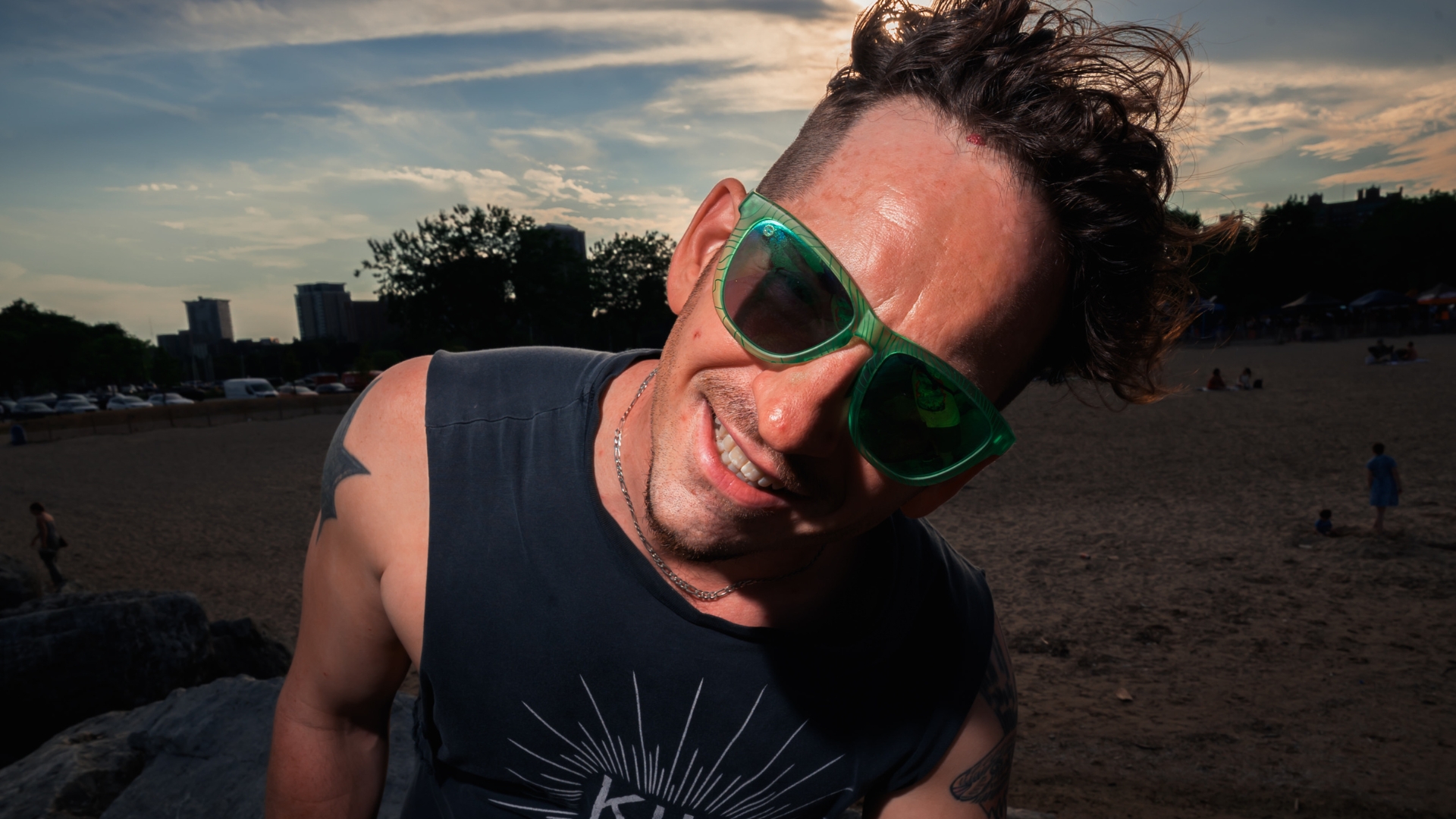
Ahead of the exhibition’s public opening, musician and songwriter Malakian spoke with SPIN about the history of Toxicity.
What does 25 years mean to you?
Just another year, but at the same time, it doesn’t feel that long ago.
What does it mean to have fans now who weren’t even born when Toxicity was released?
That’s really awesome, because it makes me feel like the music has held up. We play shows, and you see a really young fanbase out there, along with the people that have been with us for all the years we’ve been around. These huge mosh pits are young people. Old people don’t jump into mosh pits for the most part. To put out music that has stood the test of time is also something that not very many artists or musicians get to experience. It’s cool.
At the time, how was the release of Toxicity different from the experience of putting out the first record?
Well, [before] the first record, you’re a club band, and you’re not signed yet. We were playing the Roxy, the Whisky, and Troubadour, and all the Sunset Strip clubs. Nobody knew who we were. There weren’t any critics, there were no magazines, there were no write-ups. It was just our local fans. We got signed and we put those songs on our first album.
Then you put out the album and you start touring with major bands. You start touring with Slayer, you go on Ozzfest, and now you’re surrounded by the biggest bands in the world. And I was very aware that first albums are important, but if you want a third and fourth and fifth album, your second album has got to be great.
I was still living at home with my parents at the time writing Toxicity, in the same little room that I wrote the first stuff in. But now we have the bigger expectations, we have a label. We had Rick Rubin. The mindset was a little different approaching Toxicity. I remember feeling, “Dude, you gotta step it up in some way.”
How would you describe the feeling of making the record?
We knew we had great songs. I wrote “Chop Suey” while I was in the back of our RV. We were driving down the highway, and I had a guitar in the back, and I was just kicking it by myself. I wrote “Chop Suey,” not knowing that this song is going to become like the anthem to so many people’s lives.
Describe the bedroom that you wrote most of the other songs in.
It was my room that I was a teenager growing up in with posters on the wall. But all the posters on the wall were the bands that I’m now touring with. When I was 14, 15, I had Slayer posters on the wall, and now we’re touring with Slayer. It’s a normal two-bedroom house in Glendale.
Little room, little amplifier, and a guitar. No crazy gear. I had this little tape recorder. I still have those tapes. I have all the moments, like the moment I wrote “Aerials,” the moment I wrote “Psycho,” a lot of those songs. Those songs have become the fabric of my life and countless people on this planet can’t imagine their lives without these songs now.
The funny thing is, when Toxicity came out and I let my parents hear it for the first time, they recognized songs from when they were trying to sleep late at night. “Oh, that’s the song you’re always playing in your room.” My parents put up with some shit.
After making the first record, did you go into Toxicity more confident as a recording artist?
I felt more confident as a producer. Toxicity was the first album that I got co-producing credit. Toxicity was produced by Rick [Rubin] and myself. I felt more comfortable in the studio. There were things that I was trying, experimenting, layering. That’s another thing that you hear on Toxicity that you won’t hear on the first record: Vocal harmonies, but also sitars, all kinds of string instruments, orchestral instruments. We were trying new things and texturing the songs a little bit more. The first album was a little bit more raw, which some people love about the first album.
One part of the exhibit is devoted to the free show that got shut down by the fire marshal, leading to the famous Hollywood riot. What was that experience like, seeing this happen at something with your band’s name attached to it?
We didn’t make that happen. Fire department and police department made that happen, but this is happening in our honor in some way. For a heavy metal band, this kind of publicity usually works in our favor. These are the types of things that build stories—like the Rolling Stones had [Altamont] with the Hell’s Angels. These aren’t great things, but they’re things that people remember and it builds the mystique. It builds the story, and it makes the history of the band a little bit more interesting. I was also like, “I hope my parents aren’t in the audience.”
Not long before that day, you shot the music video for “Chop Suey” at a Hollywood motel with a big crowd of fans, but no one rioted.
No, that was a nice day. That whole area of Hollywood, my mom would drive me by that hotel every day on my way to school. And in the early ’80s, there were prostitutes on every street corner in Hollywood. That was part of why Shavo and I wanted to do something at a motel—we were remembering that time of our lives and where we grew up. It was that sleazy kind of Hollywood motel, even though the video doesn’t come off that way. I was kind of paying homage to the hookers.
Hollywood was definitely an interesting place to grow up. And my parents were immigrants from Iraq, so they had just come to America from Baghdad. But I was born in Hollywood, and I grew up in that apartment, and that environment was normal to me until I left it and came to Glendale. And it came out in the songs. There’s a lot of Hollywood themes. That Hollywood theme is also part of Toxicity, and later, “Lost in Hollywood” and other songs that I wrote about the city.
People who aren’t from L.A. think of Hollywood and get a different picture in their head than what you knew as someone who actually lived here.
Well, “I buy my crack, my smack, my bitch right here in Hollywood” is kind of saying that the Hollywood you guys know is not the Hollywood that I know. It was not full of movie stars, limousines, and rich people. That’s Beverly Hills.
The Hollywood that I grew up in was prostitutes, the dude walking down the street talking to himself, drug dealers, homeless, and immigrant families that had just come to the United States. There was a lot of Armenians. There was a lot of different immigrants, Mexicans. That’s the Hollywood that I grew up in, and that’s the Hollywood that usually comes out in System songs. The album is called Toxicity, with a Hollywood sign [version on the cover]. It’s not like, hooray for Hollywood. It’s trying to show the darker side, the other side.
That mix came out in the lyrics but also musically, bringing a lot of international flavor to metal that hadn’t really been there before.
That music could only have been written by an immigrant kid that grew up in Hollywood that loved rock and heavy metal music. That blend is all in System of a Down, whether it’s through the lyrics, the style of music, the attitude, the grit. You know, people talk about AI creating music, and I was talking to Serj about this a few months ago. I was like, “AI would have never predicted us. AI could have never made us before we actually existed.” The blend, like how Serj and I sing together and how our personalities are so different, and our voices are so different, and our attitudes even are so different—AI would never in a million years guess that would work.
When you play one of System’s huge stadium shows now, how much of Toxicity is in your set list?
Quite a bit. We can’t not play “Prison.” We can’t not play “Chop Suey,” we can’t not play “Aerials,” “Toxicity,” “Psycho,” “Deer Dance,” “Needles”—these are songs we play on every single System of a Down set.
A lot of it is Toxicity, but I think that we have songs from every single one of our albums that our fans want to hear. We’ve hit the whole billion stream thing with “Chop Suey,” but we also hit that with “Lonely Day.” We don’t have a huge catalog, because we have five albums, but there are songs off every single one of those albums—we can’t not play “BYOB,” people want to hear that. We know our fans want to hear certain songs, and we’re going to play those songs.
It’s always seemed that you’re the kind of band that fans know all of your music, not just the hits.
When we’re up there, that’s how it feels. It’s not like we played “Chop Suey,” and that’s when it went the most crazy. Every single song off any of our albums that we play, we get a reaction from the fans and they’re singing every note to every single one of those songs, regardless if they were hit songs.
Is that how you think about them?
Yes. I don’t have this special thing for “Chop Suey” just because “Chop Suey” is that song for people. None of the songs were written to be hits. They just accidentally became hits for people. Like, I wasn’t sitting there writing a song like “Chop Suey” with that arrangement—starting with these really melodic minor chord guitars, and then going into “Wake up!” and doing all that stuff. I’m not sitting there thinking, well, this is what the radio wants. There was nothing on the radio that was like it.
Every song that I’ve ever written in my life, or we’ve written together, it’s been because this is awesome to us. There’s never been a time where we have written a song saying, well, we need a song that’s like this, because this is what the radio is fucking playing. That has never happened.
A week after the album’s release was 9/11, and some fans started seeing premonitions in the lyrics, like “self-righteous suicide” in “Chop Suey.”
It obviously wasn’t true, but the fans were thinking that we were fucking clairvoyant or something. First, the riot, and now people think that we’re predicting things? I was all for it! I was like, yes! You look back, and some Beatles fans back in the day would think, “Oh, they’re singing about me!” These myths and different things, I always thought that’s just good for the band, so I wasn’t against it. Go for it. I mean, 9/11 happened, and we have a song that’s on the radio singing “self-righteous suicide,” and we have “aerials in the sky,” and people were making all these kind of connections. I’m not going to stop them from thinking that if it’s going to add mystery to the band.
System also seems to be in a great place, playing stadiums around the world.
It is. The friendships in the band are really strong right now. We get together, we have dinner, Shavo and I went to a hockey game together last week. Serj and I are in touch on the telephone every other week. That hasn’t happened in 20 years. We go to dinner together with the wives. Forget about the band. The friendship is back, and the friendship being back is making us enjoy the band.
You’ve seen bands who don’t get along, and that doesn’t look fun.
It’s not fun. There’s never been a time where I’ve been like, I don’t want to be in the room with Serj. Anytime Serj and I were in the room together, we were very cool, but then once that moment was done with, I wouldn’t see Serj for a very long time. It’s not that way now. Some people don’t live some of their best times at the age that I’m at right now. And I feel like I’m living some of the best times of my life at this age. So it’s great, man. Everything seems like a bonus.
To see our running list of the top 100 greatest rock stars of all time, click here.
What's Your Reaction?
 Like
0
Like
0
 Dislike
0
Dislike
0
 Love
0
Love
0
 Funny
0
Funny
0
 Angry
0
Angry
0
 Sad
0
Sad
0
 Wow
0
Wow
0