























Brian Fallon and the “New Jersey Thing”

Legend says that something sinister moves through the Pine Barrens of South Jersey. If you know the area, you know it’s the perfect place for a creature like this. Why else would Silvio and Christopher dump the bodies there?
There’s no consistent description, as it’s notoriously difficult to get a good look, but the general consensus is that it has cloven hooves, a head like a horse or maybe a goat, the wings of a bat, stands on its hind legs like a kangaroo, horns on its head and a forked tail—an amalgam of different, unique and beautiful animals made into a monster, if that’s how you want to look at it.
More from Spin:
- ‘Who’s’ Next? It’s A New War On Drugs Song
- Lucy Dacus Revisits ‘No Burden’ For 10th Anniversary
- Paula Cole Retraces Unheard Tracks From 1989-1990
The Jersey Devil is at once many things. It is the perfect cryptid for a place like New Jersey, which is also many things at once—hideous and beautiful, work and vacation, difficult and forgiving. It is as much a state of mind as it is a state. And it’s a state that churns out these complicated characters perhaps like nowhere else on Earth.
For much of Brian Fallon’s career he has been, fairly, lumped in and compared to Bruce Springsteen. It’s fair because his music, much of it, shared plenty of qualities with the Boss’s. Anthemic tales of lovable losers down on their luck. Not pity, not a “I’ll show you,” simply the fact that that’s the current lot in life. It might get better. It might not. Brian Fallon had been siphoning this not just from Bruce though. He’d siphoned it from the same well that Bruce visited. It’s just New Jersey.
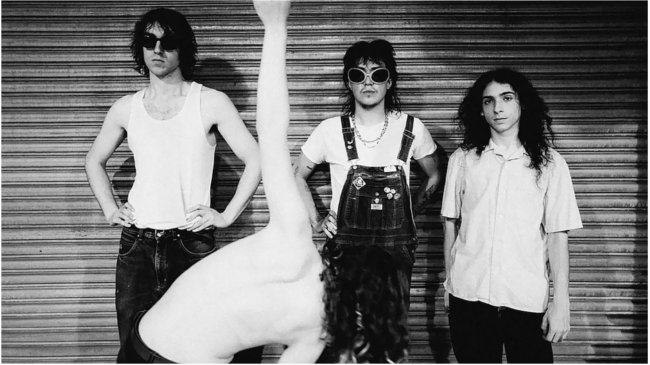
“I feel like I’m allowed to,” Fallon says. “I think that this goes back to me and the Gaslight Anthem and the Bouncing Souls and Jack Antonoff—that’s where we’re from. That is our thing. That’s like Nirvana taking from Mudhoney. That’s their thing. They’re allowed to take from there. If I grew up in Seattle, I’d be stealing from Pearl Jam and Nirvana because that’s my thing.”
Fallon has always been a champion of his home state, the warts and all. But on his new album, Not Bad for New Jersey, it’s perhaps his most blatant statement about what the state means to him.
“It’s a real compliment,” he says. “It’s almost like the joke is on me because it’s like someone else gritting their teeth and saying, ‘Ah, not bad for New Jersey,’ like some other state, like New York or whatever. It’s looking down and saying, ‘Oh, that’s not bad for New Jersey.’ You always have to add that little bit in to add the sting to the compliment. But, in a way, I always look at my life and I go, ‘That’s not bad for New Jersey.’ I’ve played with Bruce Springsteen in front of a million people. That’s crazy! It’s wild!”
It’s a matter of balance. The artists that Fallon channeled for this album, all of the ’80s rockers and troubadours alike, there had to be a wink. There couldn’t just be confidence and swagger, though that’s important. And there couldn’t just be woe-is-me whimpering. Fallon, and the artists like him, are at their best when there’s a relatability in the songwriting. That’s what makes his North Star, the Boss, so great. Life is a mixed bag. It’s not all wins and it’s not all losses. To quote Tom Petty, who Fallon also brings up in conversation among honorary Jersey Guys from around the globe: Even the losers get lucky sometimes. And even the winners have a bad game.
“The wink is just as important as the dagger that hurts so bad,” Fallon says. “As long as you keep both of those things in perspective, that’s the secret sauce to what we do, this New Jersey thing.”
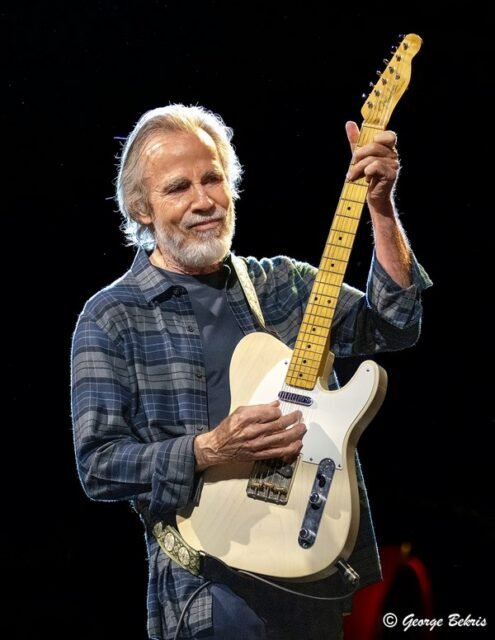
The archetypical Jersey Guy, to Fallon, is John Cusack in Say Anything. He says that the sense of longing like that is what separates him and the artists he loves from the area from everywhere else. Even punk rockers like the Bouncing Souls or songwriters-to-the-stars like j, he says, still have that sense of yearning from the outside looking in that is so necessary to Jersey music.
“We’re these romantic longers,” he says. “We live to just be crushed and then come back and long harder. That’s what we do. We are truly hopeless romantics. And I love that about us. It’s wonderful.”
For Not Bad for New Jersey, though, Fallon had to get out of the Garden State. Maybe the change of scenery allowed him to really hone in on his internal Jersey Guy, but it was at least a good excuse to get into the woods of Tennessee, about an hour or so outside of Nashville in an area bereft of things like guardrails on the back roads, to work with Butch Walker and former Dr. Dog drummer Eric Slick, and make something that felt like all of the music that formed Fallon as a kid—yes, Springsteen, but also “the ultimate Jersey Guy from Canada” Bryan Adams and Def Leppard.
“That’s the stuff that really made me,” Fallon says. “I would love to list all these cool bands and say that was the first thing I got into, but really it’s not. It’s like Def Leppard, Bryan Adams, all those things. I never really liked Mötley Crüe—no dis to those guys or anything, but I never really liked the, I don’t know what they’d call it, like cock rock or whatever? I don’t like that. That’s not for me.”
Of course not. Because there’s no wink in their version of cock rock, he says. But there was plenty in something silly like “Pour Some Sugar On Me,” Fallon says. And Def Leppard guitarist Phil Collen was even kind enough to rip a guitar part on the song “Somewhere You Shouldn’t Be.” That quintessential ’80s, smoke machine grandiosity is overt on the second track on the album, “Better Before.” You can practically see it playing over a teen movie parking lot scene or being played too loud by your dad after he’s had two (2) reasonable IPAs at dinner on vacation.
“I found that a lot of songs from the ’80s, they were really speaking to me in that way. There was John Waite’s ‘Missing You,’” Fallon says. “‘I ain’t missin’ you at all.’ Well, yes you are, because the whole song is about missing you. That bravado and that hopelessness, where it’s not cockiness. I love Lil Uzi Vert. He’s someone my son turned me onto. There’s a lot of bravado in those songs. There’s a lot of ‘I’m awesome.’ That’s cool. But I’m nothing like that. I’m the opposite of that. I feel the struggle deeply, and I really love the Bruce Springsteen broken down poet thing. That’s my stuff, man. Make me a plate of that every morning.
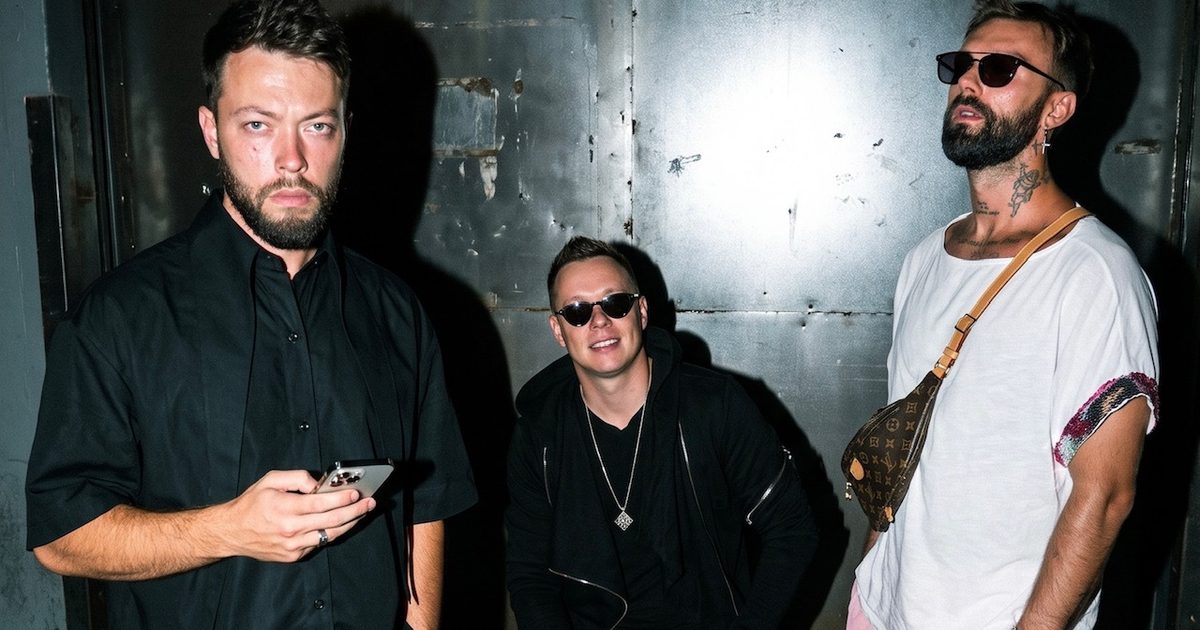
Fallon also enlisted Brandon Flowers from the Killers, now fresh off of his country pivot, for the Western-ish “Love At the End of the World.” Flowers and Fallon first bonded over Depeche Mode years ago and have stayed in touch.
“I just asked Brandon, ‘Hey man, would you help me write a song?’” Fallon says. “And he was like, ‘Sure, fly out here!’ So I flew out to Utah and just hung out and wrote a song, and that was it. I came home. We went to Einstein’s Bagel. It was really, really simple. Brandon’s a Jersey Guy, for sure. That guy is totally legit.”
There are Jersey Guys everywhere for those with eyes to see them. Fallon has eyes to see them. He is the best of the Jersey Guys. He relates to the heroes who fall down and the losers who chance their way into glory. He’s done all of that, he’s seen all of that. He’s seen a whole lot by now, and he’s nowhere close to done. There’s another Gaslight Anthem album on the way at least, he says. Early days, but it’s in the works. And he’s less concerned about hitting a certain age before writing something resembling his “masterpiece,” anymore. Maybe most importantly, he’s learned that he doesn’t have to suffer for his art to make something relatable anymore. He himself doesn’t have to be the broken down character in the verse. He can be the one telling the stories.
And there are plenty of good New Jersey characters, even legends, to sing about.
To see our running list of the top 100 greatest rock stars of all time, click here.
What's Your Reaction?
 Like
0
Like
0
 Dislike
0
Dislike
0
 Love
0
Love
0
 Funny
0
Funny
0
 Angry
0
Angry
0
 Sad
0
Sad
0
 Wow
0
Wow
0